
The Definitive Guide to Relieving Desk-Induced Back Pain
Your Back Wasn’t Built for a Chair — But These Stretches Can Help
Back stretches for sitting at a desk are one of the fastest ways to relieve the stiffness, tension, and aching that builds up during a long workday. Here are the most effective ones you can do right now:
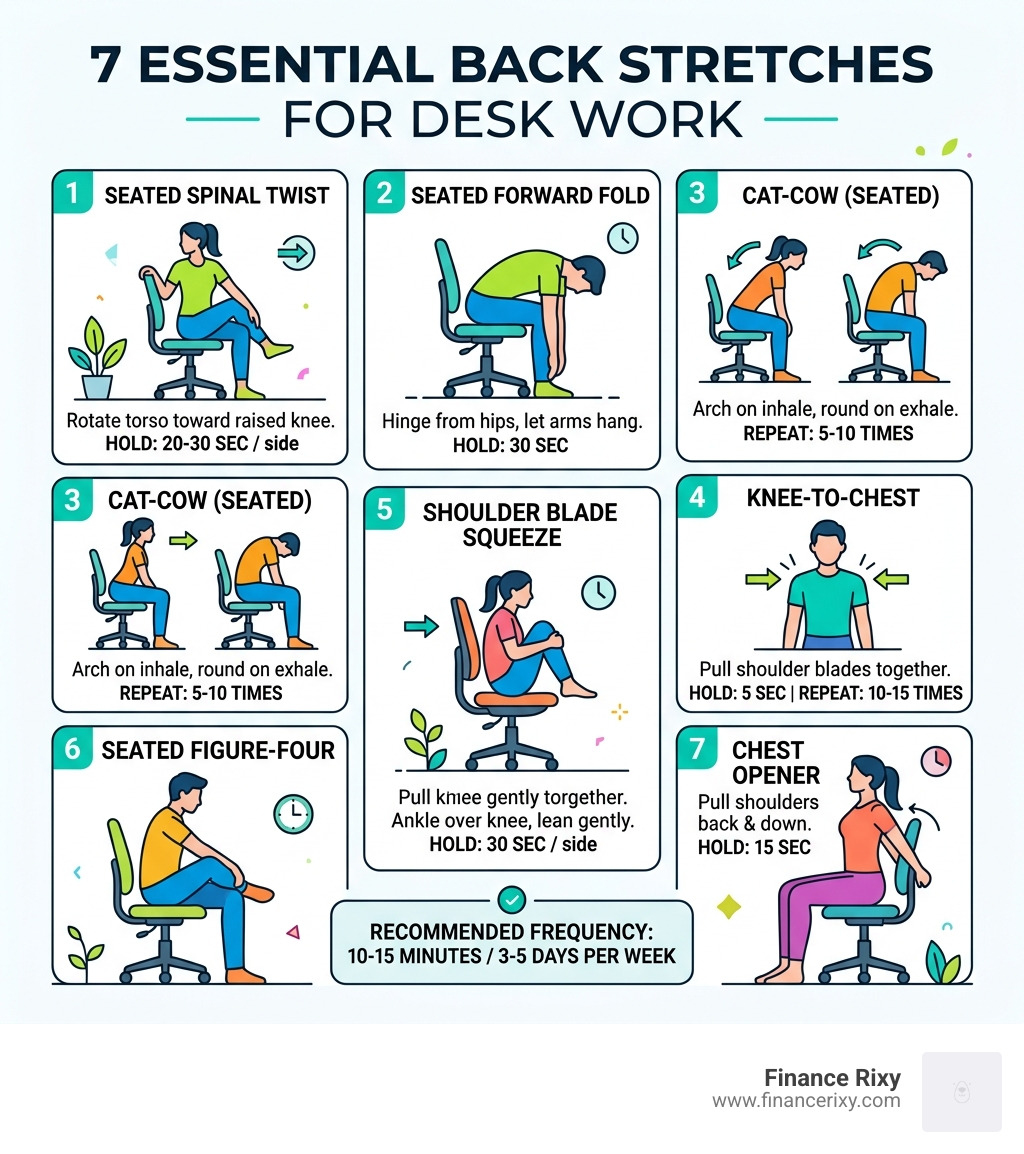
- Seated Spinal Twist – Sit tall, cross one leg over the other, and rotate your torso toward the raised knee. Hold 20-30 seconds per side.
- Seated Forward Fold – Hinge forward at your hips from your chair, let your arms hang, and hold for 30 seconds.
- Cat-Cow (Seated) – Arch your back on the inhale, round it on the exhale. Repeat 5-10 times.
- Knee-to-Chest – Pull one knee toward your chest while seated or lying down. Hold 5-10 seconds per side.
- Shoulder Blade Squeeze – Pull your shoulder blades together and hold for 5 seconds. Repeat 10-15 times.
- Seated Figure-Four – Place one ankle over the opposite knee and lean forward gently. Hold 30 seconds per side.
- Chest Opener – Sit at the edge of your chair, pull your shoulders back, and hold for 15 seconds.
Back pain is incredibly common. It’s the second most common reason people visit a doctor — right behind upper-respiratory infections. And if you work at a desk, your risk is especially high. More than half of desk workers report suffering from neck, shoulder, or back pain from sitting too long.
The problem isn’t just discomfort. Sitting for more than four hours without moving can actually reduce the height of your spinal discs by up to 10%. Over time, that adds up.
The good news? Just 10 to 15 minutes of targeted stretching, three to five days a week, has been shown to meaningfully reduce low back pain. You don’t need a gym, special equipment, or a lot of time.
This guide walks you through exactly what to do — and why it works.
Why Prolonged Sitting Causes Back Pain
It’s a bit ironic, isn’t it? We sit down to rest, yet sitting for eight hours a day is one of the most exhausting things we can do to our spines. As we move through April 2026, the “sedentary lifestyle” has become the norm for millions of us, but our anatomy hasn’t quite caught up to the invention of the office chair.
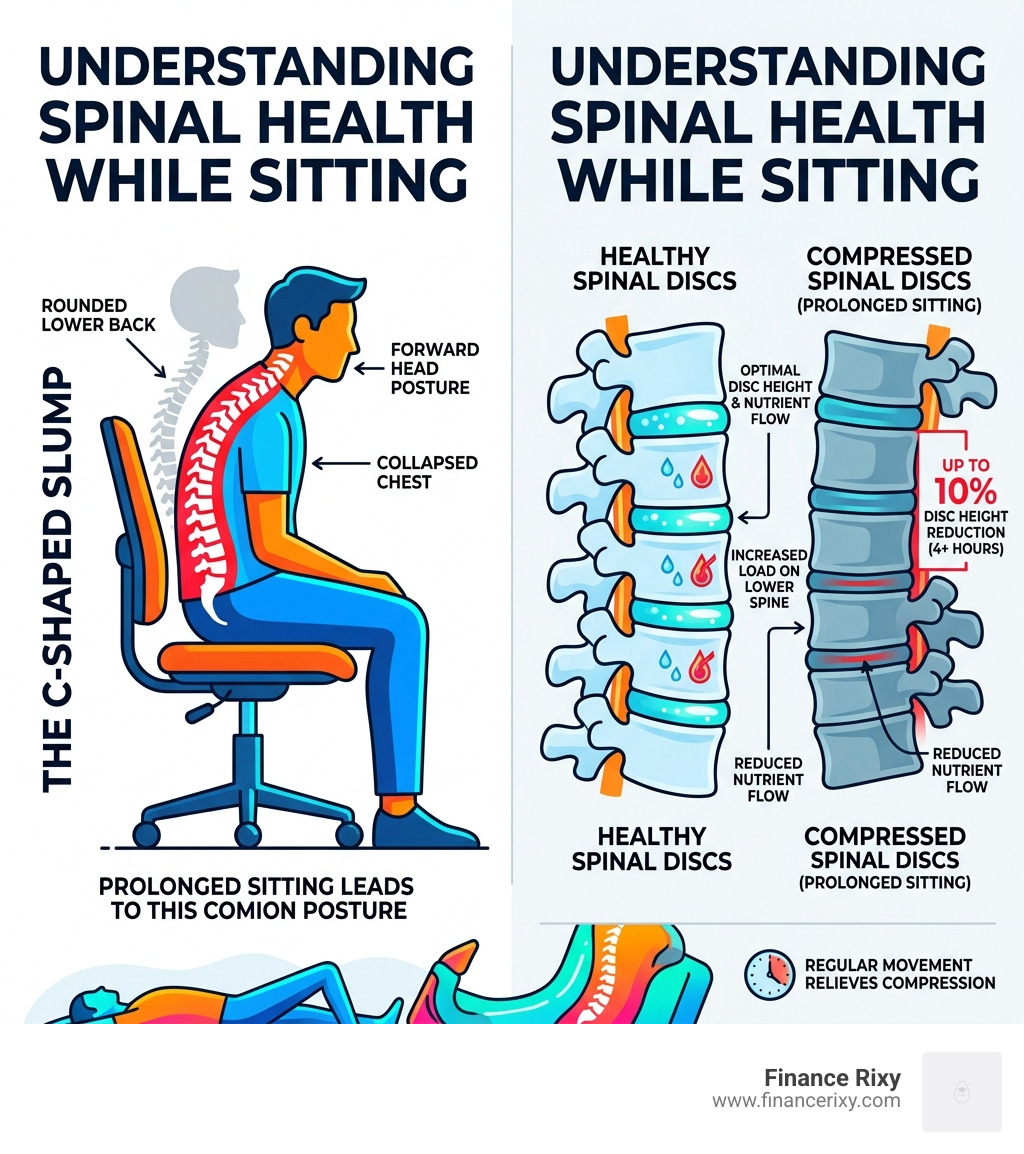
The human spine is a marvel of engineering designed for movement—walking, climbing, and reaching. When we park ourselves in a chair, we often fall into the “C-shaped slump.” This posture rounds the lower back, collapses the chest, and pushes the head forward.
The Science of the Squeeze
Research shows that prolonged sitting significantly impacts spinal pressure. When you sit for more than four hours without a break, your spinal discs—the rubbery cushions between your vertebrae—can lose up to 10% of their height. This “disc compression” happens because sitting increases the load on the lower spine compared to standing. Without movement, these discs don’t get the nutrient-rich blood flow they need to stay plump and healthy.
Muscle Imbalances: The “Crossed” Syndromes
Sitting doesn’t just affect your bones; it rewires your muscles in ways that create chronic pain. We call these “Upper Crossed Syndrome” and “Lower Crossed Syndrome.”
- Tight Hip Flexors: When you sit, your knees are bent and your hips are flexed. Over hours, your hip flexors shorten and tighten. This pulls your pelvis forward, creating an arch in your lower back that causes constant strain.
- Gluteal Amnesia: While your hip flexors are working overtime, your glutes (butt muscles) are doing absolutely nothing. They essentially “forget” how to fire, leaving your lower back to do all the heavy lifting when you finally stand up.
- Reduced Blood Flow: Static posture acts like a kink in a garden hose. It slows down circulation, meaning your muscles aren’t getting enough oxygen. This leads to that familiar feeling of stiffness and “heavy” limbs by 3:00 PM.
Essential Back Stretches for Sitting at a Desk
If you’re feeling like a human pretzel right now, don’t worry. You don’t need to quit your job to find relief. Integrating back stretches for sitting at a desk into your daily routine can reverse much of this damage.
| Feature | Seated Stretches | Standing Stretches |
|---|---|---|
| Convenience | High (do them during meetings) | Medium (need to push chair away) |
| Stability | High (chair provides support) | Low (requires balance) |
| Focus Area | Deep spinal rotation | Full posterior chain (hamstrings) |
| Discretion | High | Low |
For those who prefer visual guidance, you can check out these helpful video demonstrations of deskercises to ensure your form is spot on.
Seated Spinal Twist and Torso Rotations
This is the “bread and butter” of back stretches for sitting at a desk. It targets spinal mobility and helps decompress the vertebrae.
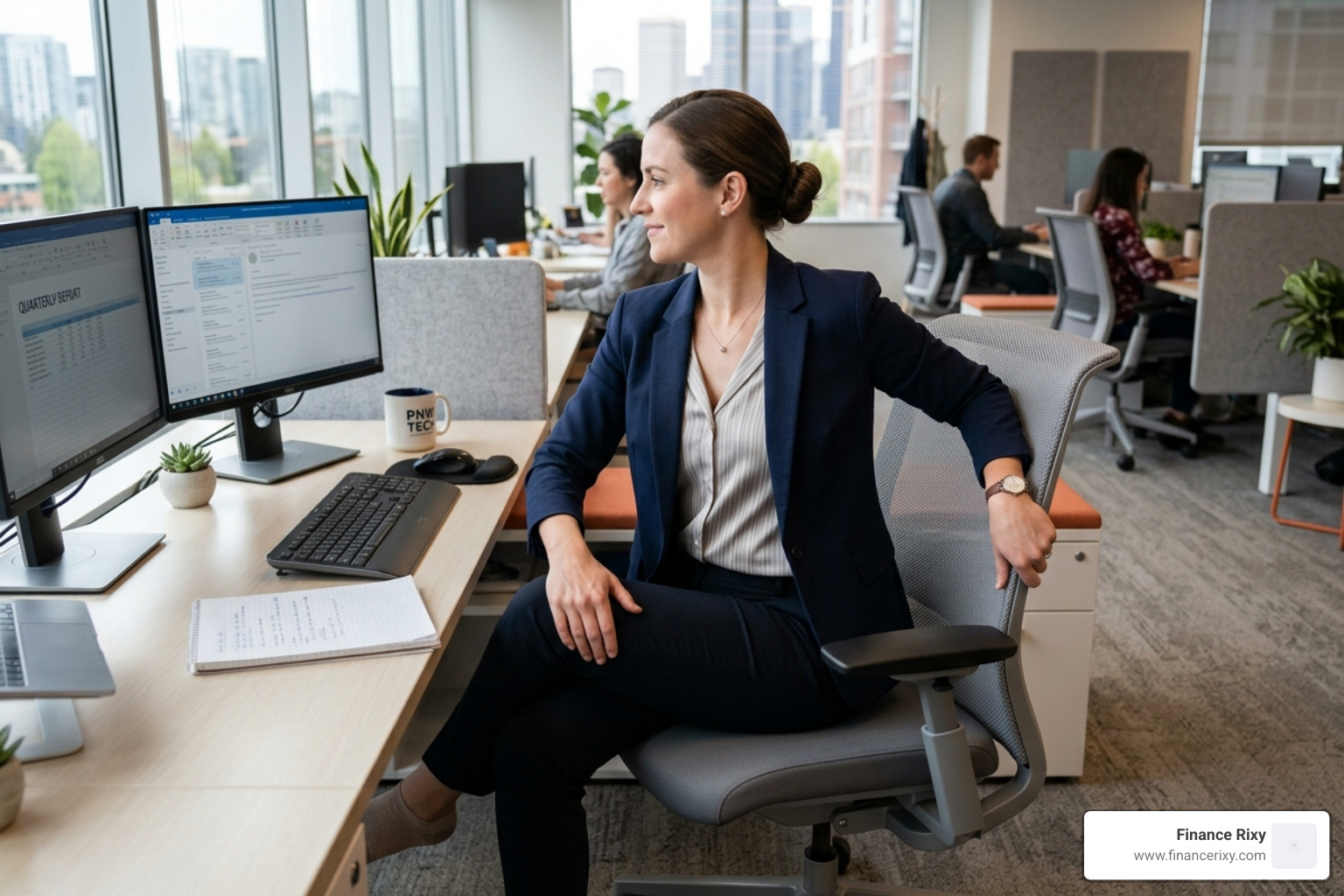
- How to do it: Sit tall with your feet flat on the floor. Cross your right leg over your left knee (or keep both feet down for a gentler version). Place your left hand on your right knee and your right hand on the back of your chair.
- The Move: Inhale to grow tall, then exhale as you gently rotate your torso to the right. Look over your shoulder.
- Duration: Hold for 20-30 seconds. Breathe deeply into your belly—this internal pressure actually helps massage the spine from the inside out. Repeat on the other side.
Lower Back Stretches for Sitting at a Desk
The lower back (lumbar spine) bears the brunt of the “C-slump.” These 5 stretches for desk chairs are specifically designed to target that deep ache.
- Seated Forward Fold: This is like a mini-vacation for your lower back. Hinge forward at your hips, letting your chest rest on your thighs and your arms dangle toward the floor. This allows gravity to pull your vertebrae apart slightly, providing instant decompression.
- Knee-to-Chest: While seated, interlace your fingers below your knee and pull it toward your chest. This stretches the glutes and lower back simultaneously. Hold for 10 seconds and switch.
- Seated Lumbar Extension: Place your hands on your hips and gently arch your back, looking up at the ceiling. This counteracts the forward slouching we do all day.
Opening the Chest and Shoulders
When your back hurts, the culprit is often actually your tight chest. As your shoulders roll forward to reach for the keyboard, your upper back muscles get overstretched and weak.
- Shoulder Blade Squeeze: Imagine there is a pencil between your shoulder blades and you’re trying to hold it there. Squeeze your blades together and down. Hold for 5 seconds and release. Repeat this 10-15 times.
- Chest Opener: Sit at the very edge of your chair. Reach behind you and grab the backrest or the sides of the chair. Gently pull your chest forward while pulling your shoulders back. This “resets” your posture and opens up your lungs for better breathing.
Frequency and Safety: How to Stretch Correctly
We often hear that “consistency is king,” and in ergonomics, that couldn’t be truer. A single 60-minute yoga class on Sunday won’t undo 40 hours of sitting. Instead, we recommend shorter, more frequent sessions.

The 2026 Gold Standard for Desk Wellness
Health experts now suggest a “5-10 minute break for every hour” spent at a workstation. If that sounds like a lot, these breaks actually boost productivity by refreshing your mental focus and increasing blood flow to the brain.
- The Routine: Aim for 10-15 minute stretching sessions, 3-5 days per week.
- The Micro-Break: Every 60 minutes, stand up for at least 2 minutes. Even just walking to the kitchen for water helps rehydrate those spinal discs.
- Deep Breathing: Never hold your breath while stretching. Deep, rhythmic breathing calms the nervous system and allows muscles to release tension more effectively.
Important Safety Tips
- Listen to your body: Stretching should feel like “good tension,” never sharp or stabbing pain. If you feel a “zing” or numbness, stop immediately.
- Move Slowly: Avoid bouncing (ballistic stretching). Gentle, sustained holds are much safer for cold muscles at a desk.
- Gradual Progression: Start with 5-second holds and 3 repetitions. As your flexibility improves, work your way up to 30-second holds.
For more personalized advice on building these habits, visit Finance Rixy for our latest mobility guides.
Beyond Stretching: Strengthening and Ergonomics
Stretching is only half of the equation. Think of stretching as “turning off” the tension, while strengthening is “turning on” the support. A 2024 meta-analysis found that combined stretch-and-strengthen programs reduced back pain 25% more than stretching alone.
Build Your Internal Back Brace
You don’t need to lift heavy weights to protect your back. Simple “activation” exercises can make a huge difference:
- Abdominal Bracing: While sitting, imagine someone is about to poke you in the stomach. Tighten your core muscles without holding your breath. Hold for 10 seconds. This creates internal stability for your spine.
- The Bridge: If you have a moment at home or in a private office, lie on your back and lift your hips toward the ceiling. This “wakes up” those sleepy glutes we mentioned earlier.
Ergonomic “Hacks” for Your Workspace
Your environment should work for you, not against you.
- The Rolled Towel Hack: If your chair doesn’t have good lumbar support, roll up a towel or a sweatshirt and place it in the small of your back. This maintains the natural curve of your spine.
- Sit-Stand Desks: Alternating between sitting and standing every 30-60 minutes can reduce upper back and neck pain significantly.
- Hydration: Spinal discs are mostly water. If you’re dehydrated, your discs are more prone to compression. Drink up!
- Active Recovery: Incorporate “Japanese walking” (meditative, slow walking) or gentle walking yoga after work to help the body transition out of its “desk shape.”
Frequently Asked Questions about Desk-Related Back Pain
Should I focus on stretching or strengthening for relief?
We recommend a combined approach. Stretching helps relieve immediate tightness (like your hip flexors and chest), while strengthening builds the muscles (like your core and glutes) that prevent the pain from coming back. The 2024 European Spine Journal reports that doing both is 25% more effective than doing just one.
How often should I take breaks from my desk?
Ideally, you should move every 30 to 60 minutes. A 5-10 minute break every hour is the sweet spot for physical health. This isn’t just for your back; it also helps prevent eye strain and improves overall circulation.
When should I consult a healthcare professional for persistent back pain?
Most desk-related pain is muscular and improves with stretching. However, you should see a doctor if you experience:
- Pain resulting from a sudden trauma (like a fall).
- Pain that radiates down your leg (sciatica).
- Numbness, tingling, or weakness in your limbs.
- Loss of bladder or bowel control (this is a medical emergency).
- Fever, unexplained weight loss, or pain that prevents sleep.
Conclusion
At Finance Rixy, we believe that your health is your greatest asset. While a desk job is a reality for many of us in 2026, chronic back pain doesn’t have to be. By incorporating back stretches for sitting at a desk into your daily routine and being mindful of your ergonomics, you can protect your spine and improve your quality of life.
Remember: Consistency over intensity. Five minutes of stretching every day is infinitely better than an hour of stretching once a month. Start your wellness journey today by setting a timer for your first stretch break!
