
One Simple Way to Desk Mobility Routine
Why Every Desk Worker Needs a Desk Mobility Routine
A desk mobility routine is a short series of stretches and movement exercises done throughout your workday to fight stiffness, reduce pain, and keep your body working properly — even when you’re stuck at a screen for hours.
Here’s a quick snapshot of what an effective routine looks like:
| Step | Exercise | Duration |
|---|---|---|
| 1 | Neck rotations | 1 min |
| 2 | Shoulder rolls + chest opener | 2 min |
| 3 | Seated cat-cow | 2 min |
| 4 | Seated figure-four hip stretch | 2 min |
| 5 | Standing hip flexor stretch | 2 min |
| 6 | Desk push-ups + chair squats | 3 min |
| 7 | Wrist flexors + ankle circles | 2 min |
Total: ~15 minutes. No equipment needed.
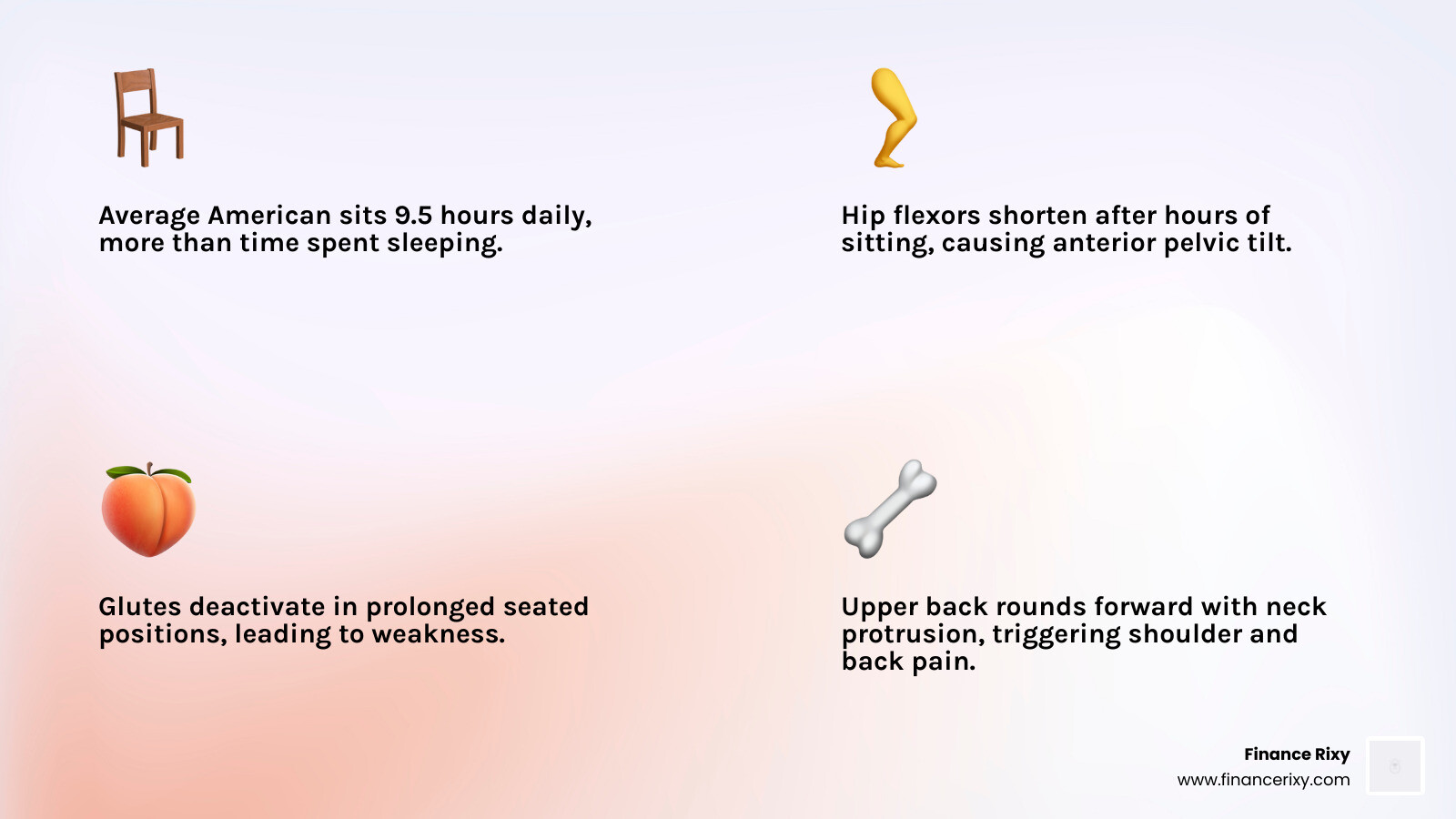
Here’s a number that should give you pause: the average American sits for 9.5 hours every single day. That’s more time than most people spend sleeping.
Your body was never designed for that. And it shows.
After just a few hours of sitting, your hip flexors start to shorten. Your glutes switch off. Your upper back rounds forward. Your neck drifts toward the screen. The result? That familiar cocktail of tight shoulders, low-grade back ache, and sluggish afternoon energy.
The frustrating part is that it rarely feels dramatic at first. It’s more like low-level tension that never fully goes away — until one day it becomes a real problem.
The good news: small, consistent movement breaks can make a significant difference. Research published in the Journal of Physical Therapy Science found that breaking up sitting with mobility drills not only eases pain but can improve strength output by up to 11 percent. A 2022 systematic review in BMJ Open confirmed that workplace exercise interventions effectively reduce musculoskeletal disorders in office workers.
You don’t need a gym. You don’t need an hour. You just need a simple plan you’ll actually stick to.
Why Your Body “Locks Up” During the Workday
If you’ve ever stood up after a long meeting and felt like a rusty folding chair, you aren’t alone. In April 2026, as hybrid work continues to be the norm, we are seeing more “static position” fatigue than ever before. But why does sitting feel so exhausting for our joints?
The human body is a master of adaptation—it adapts to what we repeat. When we sit for 8 to 10 hours, our nervous system decides that the “seated shape” is our permanent state. This leads to a series of predictable physical compensations:
- Muscle Imbalances: Some muscles become perpetually “on” (overactive), while others go to sleep (underactive).
- Hip Flexor Shortening: Because your knees are pulled toward your chest all day, the muscles at the front of your hips stay in a shortened position. Over time, they lose their ability to fully extend, which pulls your pelvis out of alignment and causes lower back pain.
- Glute Deactivation: When you sit on your glutes, you are essentially “muting” the largest muscle group in your body. This is often called “gluteal amnesia,” and it forces your lower back to take over the work of stabilizing your spine.
- Thoracic Stiffness: Your mid-back (thoracic spine) is designed to rotate and extend. However, most desk work involves a slight forward hunch. Eventually, the joints in your mid-back stiffen up, making it harder to reach overhead or even breathe deeply.
- Neural Inhibition and Reduced Circulation: Prolonged sitting slows down blood flow, particularly in the legs, because the “calf muscle pump” isn’t being used. This can lead to swelling and, in extreme cases, increased risks of deep vein thrombosis (DVT).
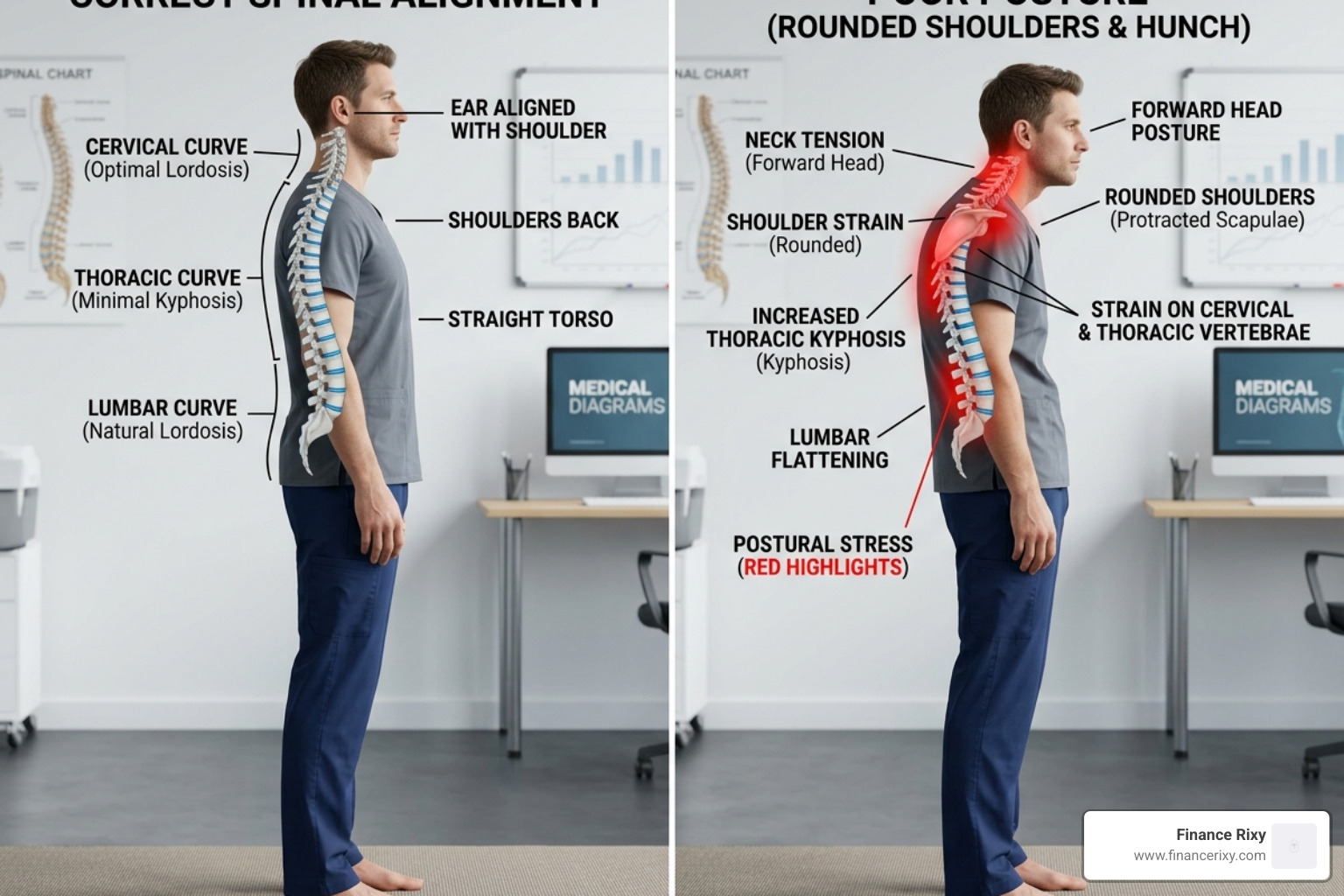
According to The Ultimate ‘Deskercise’ Routine: Stretches for the Office, staying in one position while performing repetitive motions is a recipe for musculoskeletal disorders. When our spine loses its natural curve due to slouching, we experience increased lumbar discomfort and chronic tension that can even lead to tension headaches.
The Science-Backed Benefits of a Desk Mobility Routine
We often think of a desk mobility routine as just “stretching,” but it is actually much more. While flexibility refers to the passive length of a muscle, mobility is about control. It is the ability to move a joint actively through its full range of motion.
Implementing a daily routine offers several high-impact benefits that we’ve observed in the 2026 wellness landscape:
- Increased Strength and Performance: As mentioned earlier, breaking up sitting can improve strength output by up to 11%. When your joints move better, your workouts outside of the office become more effective.
- Mental Clarity and Productivity: Movement stimulates blood flow and oxygen to the brain. Those who take regular mobility breaks often find that the “3:00 PM crash” disappears, replaced by sharper focus.
- Joint Resilience: By moving your joints through their full range, you “oil” them with synovial fluid. This prevents the “grind” that leads to long-term wear and tear.
- Metabolic Health: Brief movement snacks help regulate blood sugar levels and improve circulation, counteracting the metabolic slowdown associated with sedentary behavior.
- Endorphin Release: Even a five-minute flow can trigger the release of feel-good chemicals that reduce workplace stress.
As highlighted in the Top 12 Mobility Exercises to Do at Your Desk, these exercises are a time-efficient way to promote circulation and balance, ensuring that your body stays as sharp as your mind.
Your 15-Minute Daily Desk Mobility Routine
You don’t need to leave your workstation to reclaim your physical health. We recommend performing this routine once a day, or splitting it into two 7-minute “resets.”
- Neck Slides & Rotations (1 min): Sit tall. Gently slide your chin straight back (creating a “double chin”) to reset your cervical spine. Then, slowly rotate your head side to side.
- Shoulder Rolls (2 min): Draw big circles with your shoulders—up to your ears, back, and down. Focus on the “down and back” portion to counteract the keyboard hunch.
- Thoracic Rotations (2 min): While seated, place your right hand on your left knee. Gently twist to look over your left shoulder. Hold for two breaths and switch.
- Seated Cat-Cow (2 min): Place your hands on your knees. Inhale, arch your back, and look up (Cow). Exhale, round your spine, and tuck your chin (Cat).
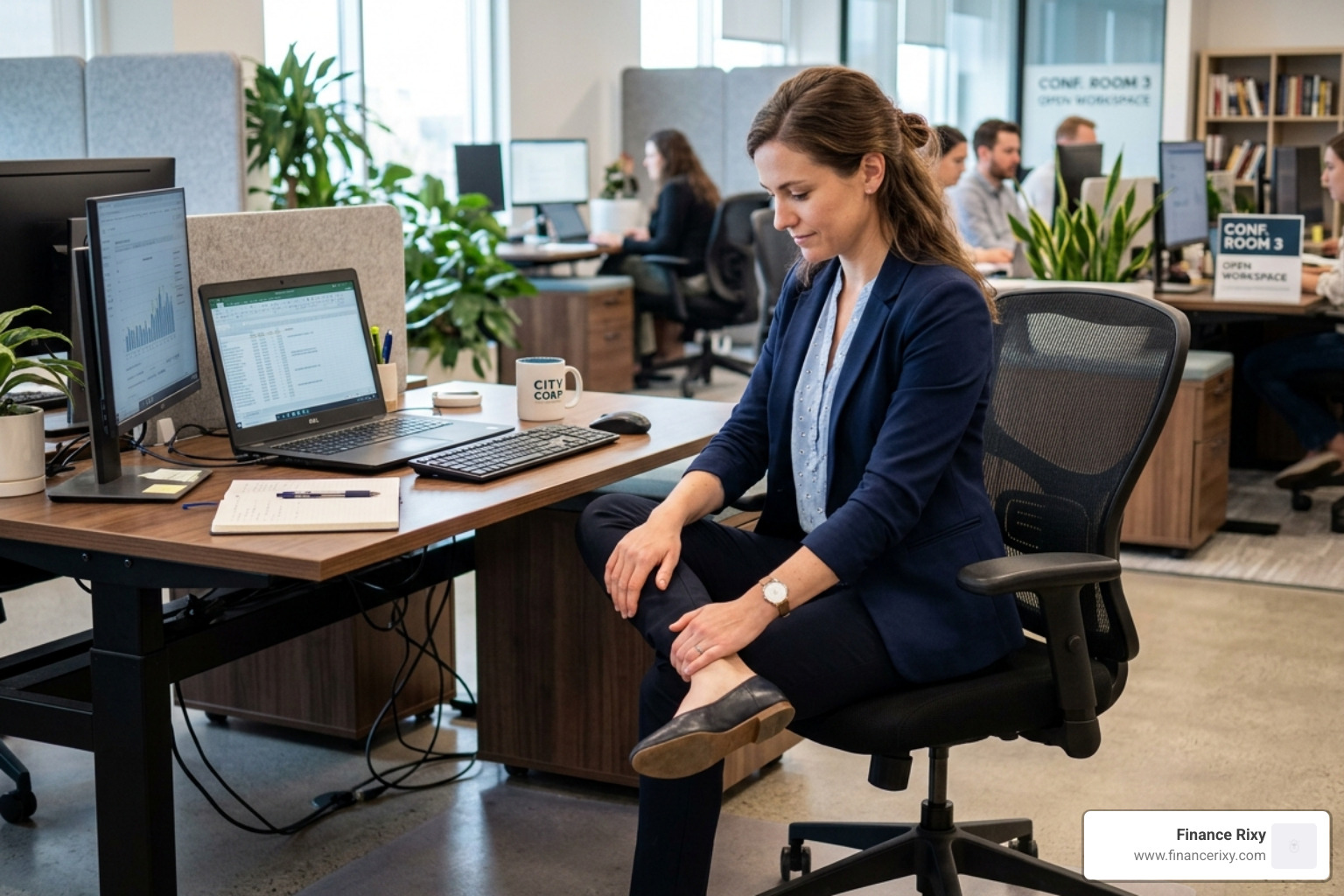
- Seated Figure-Four (2 min): Cross your right ankle over your left knee. Keep your back straight and lean forward slightly until you feel a stretch in your right hip. Switch sides.
- Wrist Flexors & Ankle Rocks (2 min): Extend one arm, palm out, and gently pull your fingers back. For ankles, while sitting, lift your heels, then lift your toes to keep blood moving.
- Desk Push-Ups (2 min): Stand up. Place your hands on the edge of a sturdy desk. Perform 10-15 controlled push-ups to activate your chest and core.
- Chair Squats (2 min): Stand in front of your chair. Lower your hips until they just touch the seat, then stand back up. Repeat 15 times to wake up your glutes.
Mastering Form and Breathing for Your Desk Mobility Routine
In April 2026, the standard for wellness isn’t just doing the move—it’s how you breathe through it.
- Nasal Breathing: Always breathe through your nose. This keeps your nervous system in a “rest and digest” state. If you find yourself holding your breath, you’re pushing too hard.
- Exhale into the Stretch: As you reach the “tight” part of a movement, exhale slowly. This signals to your brain that the position is safe, allowing the muscle to relax.
- Eccentric Control: Don’t just “drop” into a squat or a stretch. Move slowly and with intention.
- Safety First: Mobility should feel like a “3 to 5” on a scale of 10 for intensity. If you feel sharp pain or numbness, stop immediately.
Equipment-Free Stretches for Common Pain Points
If you only have two minutes, target these specific “desk-job” hotspots:
- Rounded Shoulders (The Doorway Stretch): Stand in a doorway with your forearms on the frame. Step forward gently to open up your chest.
- Forward Head (Chin Tucks): Imagine a string pulling the top of your head toward the ceiling while you tuck your chin.
- Tight Hips (Standing Hip Flexor Lunge): Step one foot back, keep your torso upright, and squeeze the glute of your back leg. You should feel a stretch in the front of the trailing hip.
- Lower Back (Glute Squeezes): Simply standing up and squeezing your glutes as hard as you can for 10 seconds can help stabilize a “cranky” lower back.
How to Integrate Movement Without Losing Productivity
We know what you’re thinking: “I have too many emails to spend 15 minutes stretching.” The trick is to stop viewing mobility as a “workout” and start viewing it as a “reset.”
- The Pomodoro Technique: Work for 55 minutes, then move for 5 minutes. This 5-minute “movement snack” is often more effective than one long session at the end of the week.
- Habit Stacking: Do three neck rolls every time you finish a glass of water. Do five chair squats every time you hang up a call.
- The 20-20-20 Rule: To prevent eye strain and forward-head posture, every 20 minutes, look at something 20 feet away for 20 seconds.
- Standing Meetings: If you have an audio-only call, stand up and pace. You can easily do a standing hip flexor stretch or calf raises while listening.
- Ergonomic Setup: Ensure your monitor is at eye level. If you use a laptop, consider an external keyboard so you aren’t hunched over a small screen.
Frequently Asked Questions about Desk Mobility
How often should I perform a desk mobility routine?
Consistency is much more important than intensity. We recommend a full desk mobility routine at least once a day, but the real “magic” happens with micro-habits. Aim to move for at least 60 seconds every hour. Cumulative movement throughout the day is what prevents the body from “locking” in the first place.
Can a standing desk replace a mobility routine?
Not exactly. While standing desks are great for changing your position, “static standing” can be just as hard on your body as static sitting. You might swap hip stiffness for foot and lower back fatigue. The key is variety. Alternate between sitting, standing, and moving. A standing desk is a tool for variety, not a cure-all.
How do I know if my mobility is improving?
Tracking progress in April 2026 is about more than just touching your toes. Ask yourself:
- Do the first few steps after a long meeting feel smoother?
- Is your neck less “loaded” or heavy by 5:00 PM?
- Are you sitting taller without having to consciously think about it?
- Has your energy stayed consistent throughout the afternoon?
Conclusion
At Finance Rixy, we believe that your health is your most valuable asset. A desk mobility routine isn’t just about avoiding a sore back; it’s preventative medicine that ensures you can enjoy your life outside of work hours.
By committing to just 10 or 15 minutes of movement each day, you are building joint resilience, sharpening your mental focus, and undoing the “damage” of the modern sedentary life. Start today by choosing just two of the stretches mentioned above and doing them after your next meeting. Your future self will thank you for the investment.
