
How to Stay Limber While Chained to Your Desk All Day
You’re a Desk Potato — Here’s What to Do About It
Stretches for sitting at a desk all day are one of the simplest ways to fight back against the stiffness, soreness, and pain that come from hours of barely moving.
Here are the most effective desk stretches to get you started:
- Neck tilt — drop one ear toward your shoulder, hold 15-30 seconds per side
- Shoulder shrug — raise both shoulders to your ears, release, repeat 10 times
- Seated spinal twist — rotate your upper body and hold the back of your chair
- Chest opener — interlace fingers behind your back and push your chest forward
- Seated hip stretch — cross one ankle over the opposite knee and lean forward gently
- Wrist extensor stretch — extend one arm, pull fingers back with the other hand
- Standing calf stretch — step back from your chair and press your heel into the floor
Hold each stretch for 15 to 30 seconds, and aim to repeat these at least every two hours.
An analysis of job trends over the past 50 years found that at least 8 in 10 American workers are what researchers call “desk potatoes” — people whose jobs involve almost no physical activity. If you’re reading this, you’re probably one of them.
And your body knows it.
Sitting for long stretches puts constant stress on your neck, shoulders, upper back, hips, and wrists. Over time, that stress turns into stiffness, then pain. Research shows it can also raise your risk of heart disease, diabetes, and obesity.
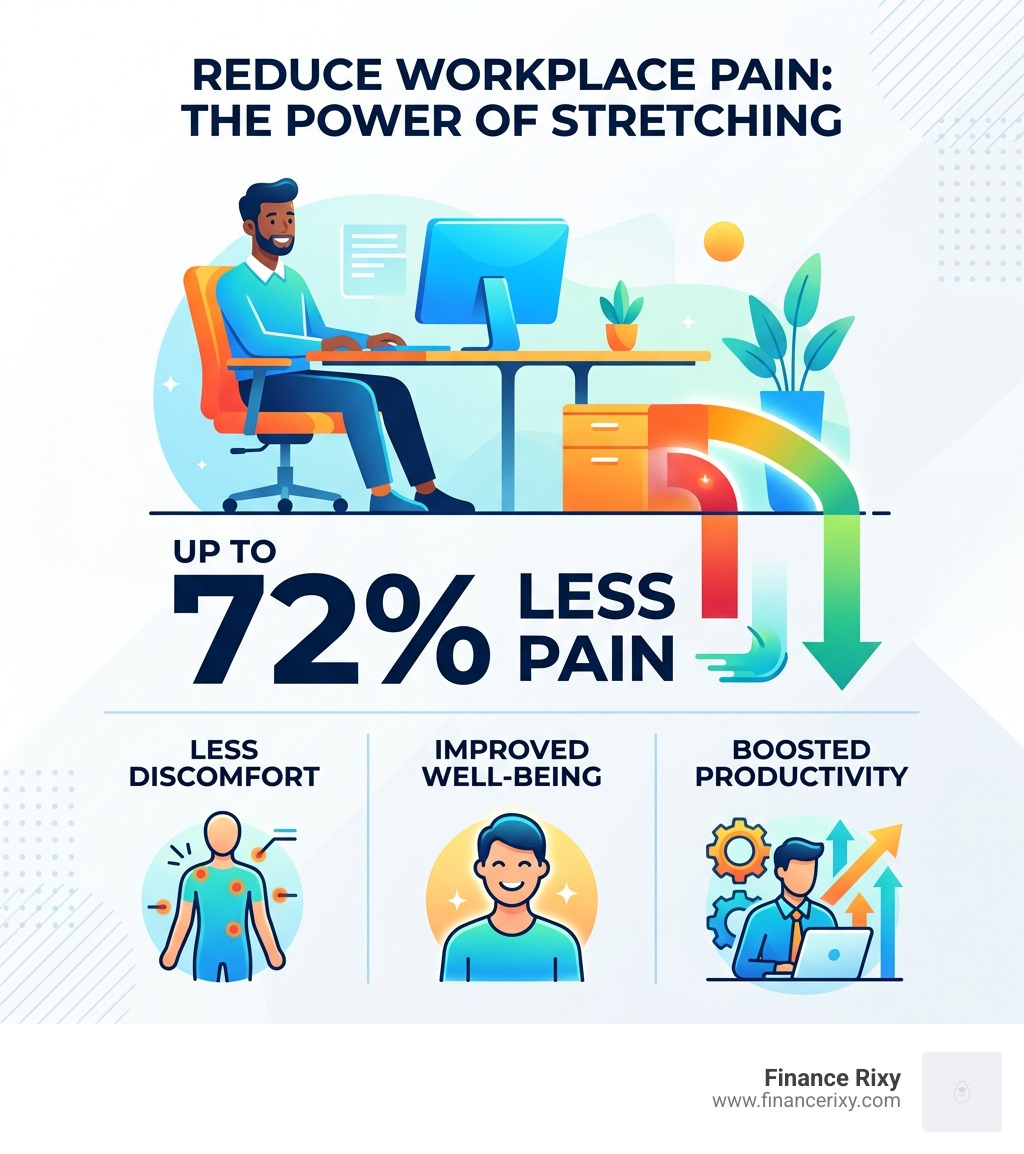
The good news? You don’t need a gym, special gear, or even a sweat session to fix it. A few targeted stretches — done right at your desk — can make a real difference. Studies show that periodic workplace stretching may reduce pain by up to 72 percent.
Why Your Body Rebels Against the 9-to-5 Grind
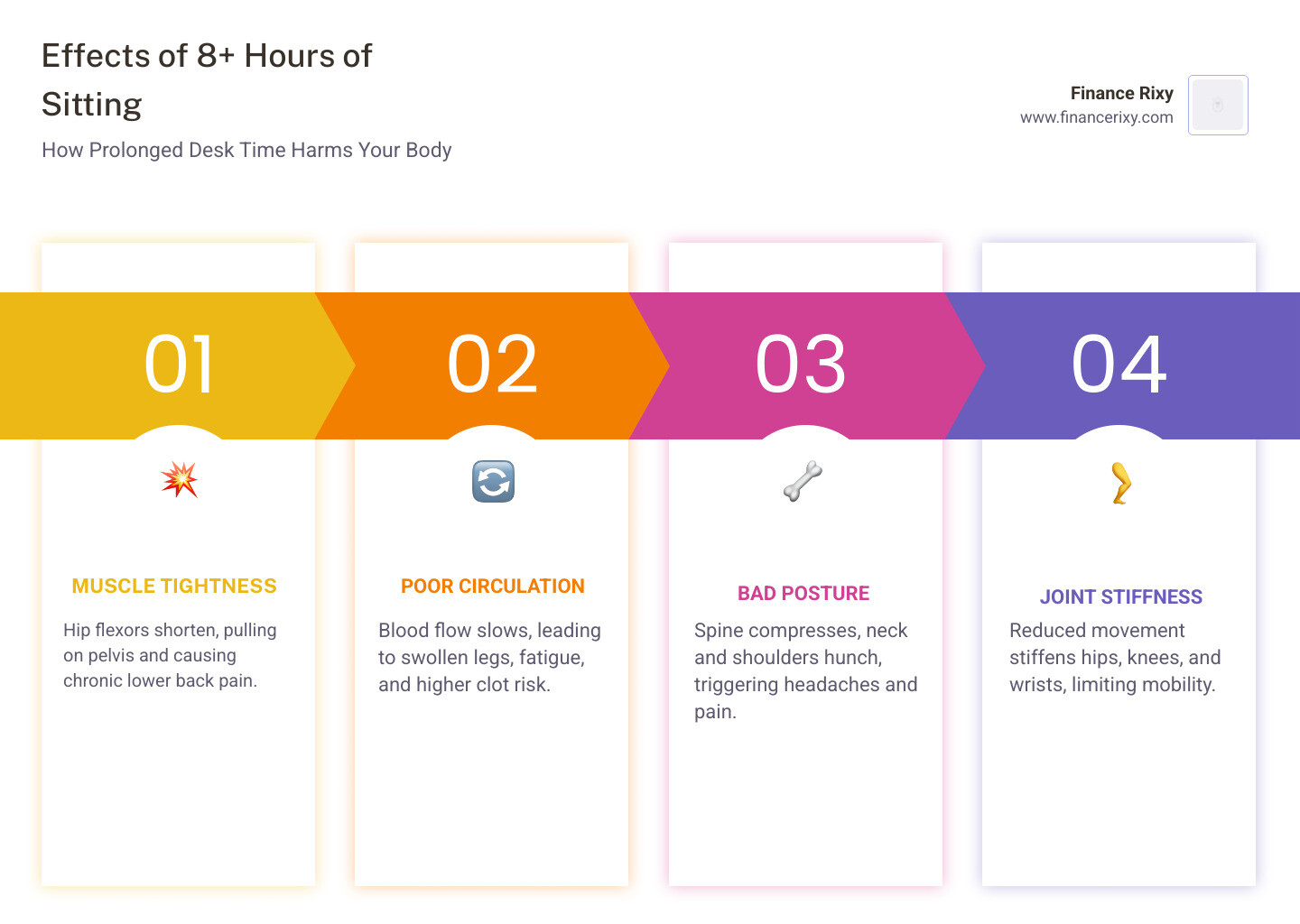
It is now April 2026, and while technology has made our work more efficient, it hasn’t made our bodies any happier. Human beings were designed to move, yet many of us spend upwards of eight hours a day essentially frozen in a seated position. When we remain stationary for that long, our bodies begin to “rebel” in very specific, painful ways.
The primary culprit is muscle tightness. When you sit, certain muscles are kept in a shortened state for hours. Your hip flexors—the muscles at the front of your hip that help you lift your legs—are constantly contracted. Over time, they actually shorten, which pulls on your pelvis and is a leading cause of chronic lower back pain.
Furthermore, prolonged sitting leads to reduced circulation. Without the “pump” of our leg muscles moving, blood flow slows down. This lack of stimulation often results in that familiar feeling of heaviness, cramping, or even “brain fog” as oxygen delivery becomes less efficient.
Then there is the “posture collapse.” As the day goes on, gravity wins. We slump forward toward our screens, our shoulders round, and our heads jut forward—a phenomenon often called “tech neck.” This places immense strain on the spinal erector muscles and the upper trapezius, leading to tension headaches and spinal compression. By incorporating stretches for sitting at a desk all day, we can interrupt this collapse and give our joints the space they need to breathe.
The Best Stretches for Sitting at a Desk All Day
To counteract the “chaos” of a long workday, we need more than just a quick reach for the ceiling. We need a strategy. At Finance Rixy, we advocate for “movement snacks”—short, frequent bursts of activity that keep your range of motion intact and your blood flowing.

Consistency is the secret sauce. You don’t need a 60-minute yoga class; you need 2 to 5 minutes of movement every hour or two. This keeps your muscle extensibility high and prevents the “setting” of stiffness that makes it hard to stand up straight at 5:00 PM.
When choosing your 12 Best Stretches for Desk Workers, it helps to understand the difference between dynamic and static movements.
| Feature | Dynamic Stretching | Static Stretching |
|---|---|---|
| Method | Controlled, repetitive motion | Holding a position |
| Primary Goal | Increase blood flow & temperature | Lengthening muscle tissue |
| Best For | “Waking up” muscles during work | Deep relaxation and flexibility |
| Example | Shoulder circles or leg swings | 30-second hamstring hold |
Essential Neck and Shoulder Stretches for Sitting at a Desk All Day
The neck and shoulders are usually the first areas to scream for help. Because the upper trapezius muscles work constantly to stabilize your head while you look at a monitor, they become incredibly sore.
- Neck Tilts and Turns: Start by sitting tall. Slowly drop your right ear toward your right shoulder. For a deeper stretch, gently grip the seat of your chair with your left hand. Hold for 20 seconds, then switch. Follow this with slow head turns, looking as far over each shoulder as comfortable to maintain your range of motion for daily tasks like driving.
- Shoulder Shrugs: This is the ultimate tension killer. Inhale deeply as you lift your shoulders all the way to your ears, hold for a second, and then “drop” them as you exhale. Repeat this 10 times to reset your posture.
- Upper Trap Release: Reach one hand over your head and gently guide your ear toward the opposite shoulder. Don’t pull hard; the weight of your hand is often enough to release the tight band of muscle connecting your neck to your shoulder.
- Cross-Arm Stretch: Pull one arm across your chest, using the other arm to gently hug it closer. This targets the back of the shoulder, which gets overstretched and weak from slumping forward.
Lower Body Stretches for Sitting at a Desk All Day
Your lower half bears the brunt of the “sitting disease.” When your hips and glutes are compressed for hours, it affects your entire gait and back health.
- Seated Pigeon (Figure-4): While seated, cross your right ankle over your left knee. Keep your foot flexed to protect your knee. If you feel a stretch in your glute already, stay there. If not, lean forward slightly from your hips. This relieves the pressure built up in the hips and glutes.
- Office Chair Hip Flexor Lunge: Stand up and place one foot on your chair (ensure it’s stable!). Keep your back leg straight and tuck your tailbone under. You’ll feel a deep opening in the front of the hip of the standing leg. This is crucial for undoing the “shortening” caused by sitting.
- Hamstring Extensions: You can do these while seated by extending one leg straight out, resting the heel on the floor, and leaning forward. Just be careful: 7 Easy Stretches to Counteract Sitting experts suggest stretching one leg at a time to avoid straining your lower back.
- Standing Calf Stretch: Stand behind your chair and step one foot back, pressing the heel into the floor. This improves circulation in the lower legs and prevents the “heavy leg” feeling at the end of the day.
Torso and Wrist Relief
Don’t forget the middle and the extremities! Your trunk is the center of all movement, and your wrists are the workhorses of the digital age.
- Spinal Twists: Sit sideways in your chair. Keep your feet flat on the floor. Reach around and hold the back of the chair with both hands, using it to gently rotate your torso. Exhale as you twist to allow for a deeper range of motion.
- Chest Openers: Interlace your fingers behind your back, straighten your arms, and lift your chest toward the ceiling. This counteracts the “keyboard slouch” and opens up your lungs for better breathing.
- Wrist and Forearm Stretches: Extend one arm with the palm facing up. Use the other hand to gently pull your fingers back toward your forearm. Flip the hand (palm down) and repeat. This is vital for carpal tunnel prevention and relieving the strain of constant typing.
- Lateral Line Stretch: Reach one arm overhead and lean to the opposite side. This stretches the “intercostal” muscles between your ribs and the “lats” on the side of your back, which can become compressed when you lean on one elbow all day.
How to Build a Desk Stretching Routine That Sticks
Knowing the stretches is only half the battle; the real challenge is remembering to do them. We recommend the “Two-Hour Rule.” At a minimum, you should be moving every 120 minutes.
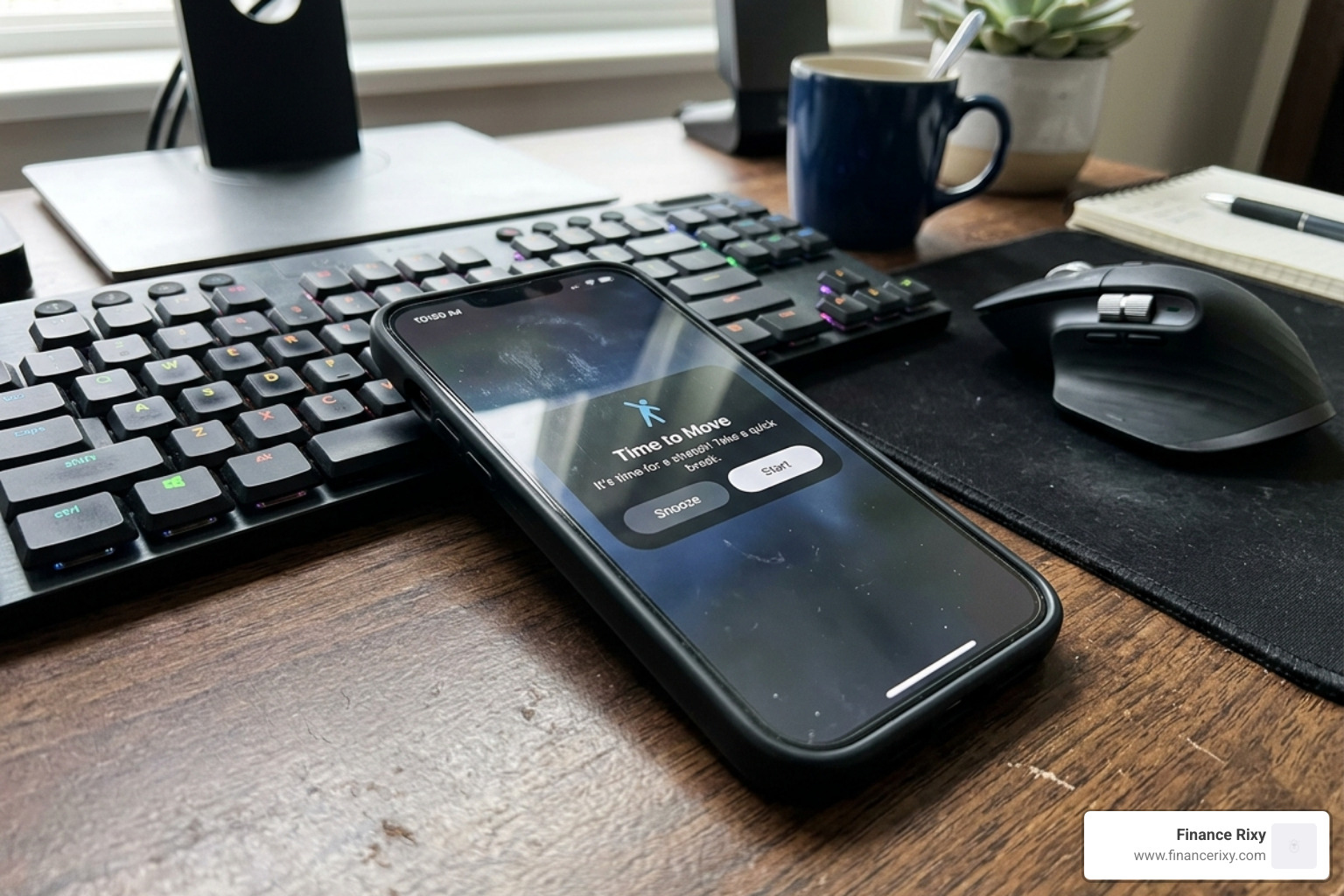
- Digital Reminders: Use apps like StretchClock or simply set a recurring alarm on your phone. When the timer goes off, it’s time for a 2-minute “movement snack.”
- Habit Stacking: Tie your stretches to existing habits. Stretch your wrists every time you hit “send” on a long email, or do 10 standing squats every time you finish a phone call.
- Standing Calls: If you don’t need to be typing, stand up. Walking around your office during a meeting can increase blood flow and even boost your creativity and focus.
- Virtual Walking Clubs: If you work remotely, start a “walking club” with your teammates. Hold each other accountable for taking a 15-minute walk before or after lunch.
- Ergonomic Adjustments: Stretches work best when your setup isn’t fighting you. Ensure your screen is at eye level and your elbows are at a 90-degree angle.
Frequently Asked Questions About Desk Stretching
How often should I stretch during the workday?
Experts from the Mayo Clinic and Hinge Health recommend moving as often as possible. At a bare minimum, aim for a stretching break every two hours. However, a “movement snack” every 30 to 60 minutes is ideal for keeping blood circulating and preventing muscle “set.”
Can stretching at my desk actually improve productivity?
Yes! Periodic breaks for physical activity have been shown to reduce fatigue and improve brain function. By increasing blood flow to the brain and relieving physical discomfort, you can maintain a higher level of focus for longer periods compared to powering through while in pain.
What are the signs I’m stretching incorrectly?
Stretching should feel like “mild tension” or a “pleasant ache,” never sharp pain. If you feel numbness, tingling, or a sharp stabbing sensation, stop immediately. Also, avoid “bouncing” (ballistic stretching); instead, use smooth, controlled movements to avoid micro-tears in the muscle tissue.
Conclusion: Reclaiming Your Mobility with Finance Rixy
At Finance Rixy, we believe that your job shouldn’t come at the cost of your physical health. While being a “desk potato” might feel inevitable in our modern economy, it doesn’t have to be your permanent state. By incorporating these stretches for sitting at a desk all day, you are taking a proactive step toward long-term wellness.
The goal isn’t perfection; it’s consistency. Even if you only manage one chest opener and a few neck tilts today, you’re already doing more for your body than you were yesterday. Start small, listen to your body, and improve your physical well-being today by making movement a non-negotiable part of your workday. Your back, hips, and future self will thank you.
