
8 Easy Ways to Stop Slouching and Save Your Spine
You’re Slouching Right Now — Here’s How to Fix It
Fix slouching at work by making these changes today:
- Adjust your monitor to eye level so your neck stays neutral
- Set a timer to stand up and move every 20-30 minutes
- Sit all the way back in your chair with your lower back supported
- Keep feet flat on the floor and elbows bent at 90 degrees
- Do chin tucks — pull your chin straight back, hold 5 seconds, repeat 10 times
- Squeeze your shoulder blades together to reset your upper back
- Strengthen your core with planks and bridges to support your spine long-term
- Use phone reminders or habit stacking to make posture checks automatic
You know the feeling. You’re deep into a spreadsheet or email thread, and somewhere along the way your shoulders roll forward, your neck creeps out like a turtle, and your back curves into a question mark.
Then you catch yourself — sit up straight — and within 90 seconds, you’ve melted right back down.
Sound familiar?
You’re not alone, and it’s not a willpower problem. Over 80% of adults experience posture-related pain, and the average office worker spends more than 10 hours a day sitting. That’s a lot of time for your body to drift into what researchers call “the desk slump.”
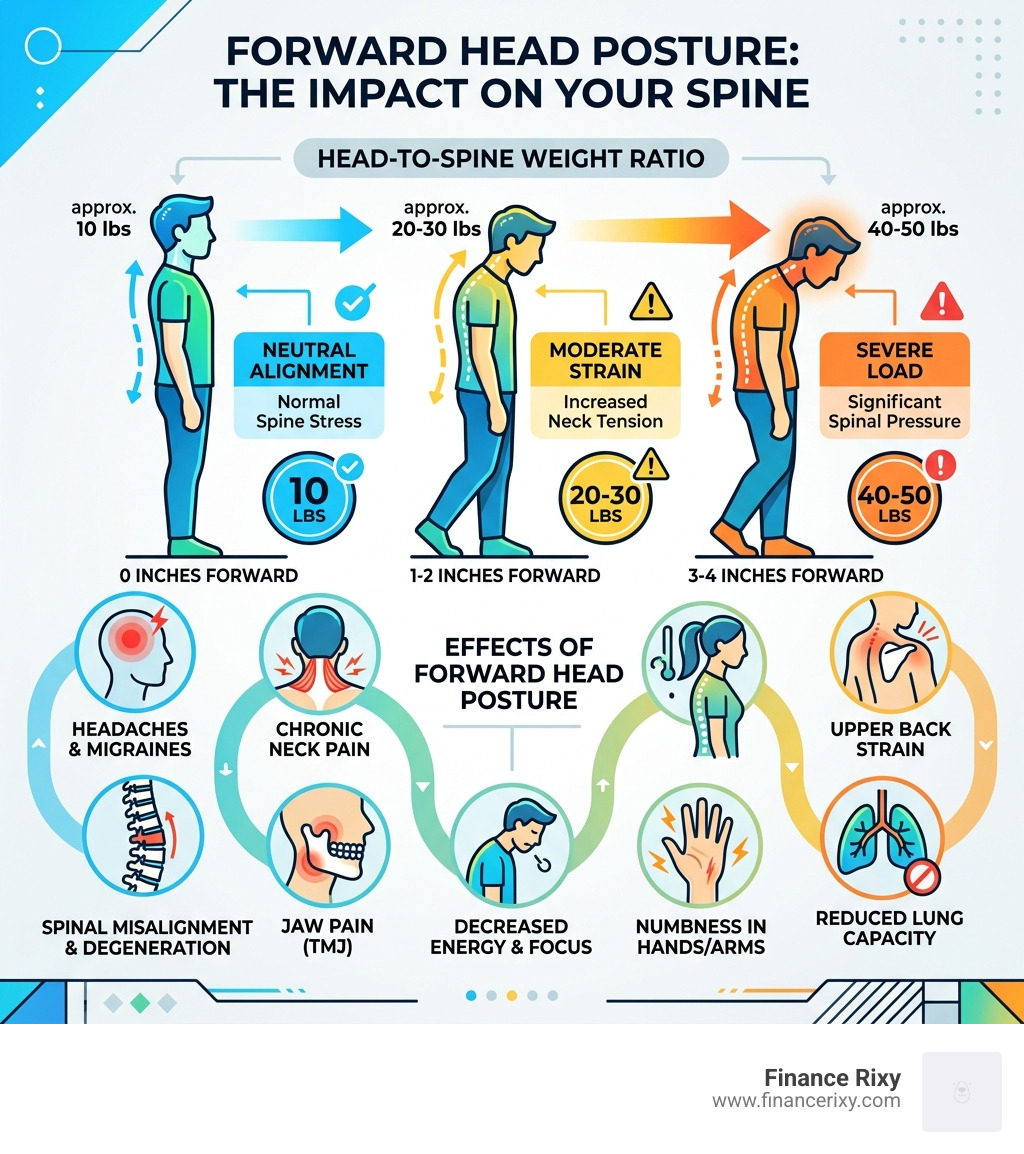
Here’s the part that should get your attention: every inch your head drifts forward from its neutral position adds roughly 10 pounds of pressure to your spine. Lean forward 3-4 inches — which is completely normal when staring at a screen — and you’re adding 30 to 40 extra pounds of strain on your neck and upper back all day long.
That’s not a small thing.
Poor posture isn’t just about looking tired or unprofessional. It quietly affects your breathing, your energy levels, and even your focus. But the good news? It’s fixable — and you don’t need to become a yoga guru to do it.
Why You Must Fix Slouching at Work to Protect Your Health
If we want to fix slouching at work, we first have to understand that this isn’t just a cosmetic issue. It is a fundamental health necessity. In April 2026, with more of us working remotely or in hybrid office settings than ever before, the “desk slump” has become a silent epidemic.
When you slouch, you aren’t just “relaxing.” You are actually compressing your internal organs and misaligning your skeleton. One of the most shocking statistics is that poor posture can decrease lung capacity by 20-30%. Think about that: by simply sitting poorly, you are restricting the oxygen intake your brain needs to stay sharp and your body needs to stay energized. This leads directly to that 3:00 PM cognitive fatigue we all dread.
Beyond your lungs, slouching creates a domino effect of health issues:
- Digestive Distress: Compressing your abdomen can lead to heartburn, constipation, and even incontinence.
- Shortened Hip Flexors: Sitting for 10 hours a day causes the muscles at the front of your hips to tighten and shorten, which pulls your pelvis out of alignment.
- Tension Headaches: That 40 pounds of extra pressure on your neck doesn’t just stay in your neck; it radiates upward, causing chronic headaches.
The Biomechanics of the “Desk Slump”
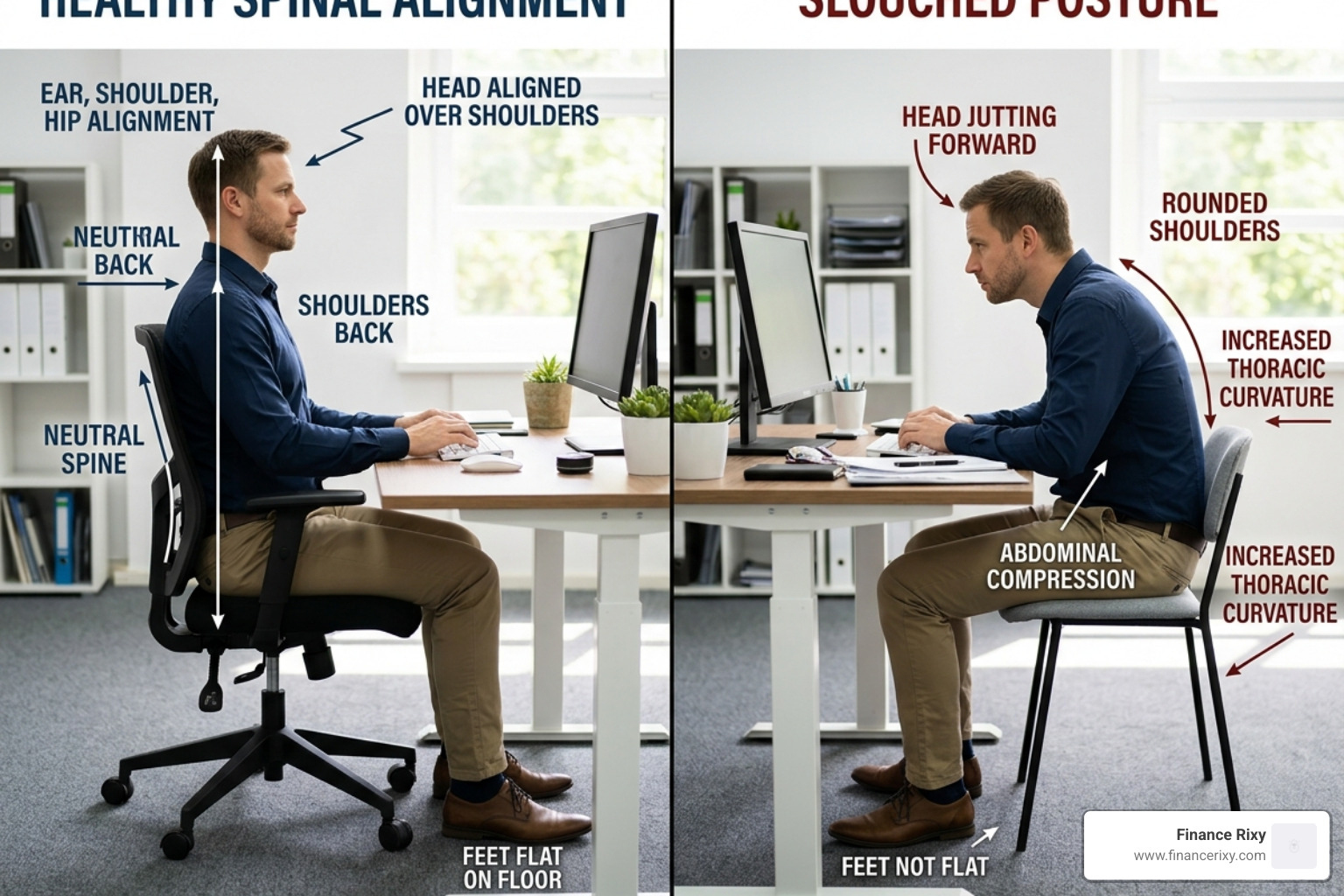
Why do we do it? Our bodies are designed to take the path of least resistance. Maintaining an upright, neutral spine requires active muscle engagement. When our postural muscles—the ones in our upper back and core—get tired, we “collapse” into our ligaments and joints.
This collapse leads to internal shoulder rotation (where your shoulders roll forward toward your chest) and forward head posture (the “turtle neck”). To combat this, we recommend following the 7 Best Posture Practices for Sitting at a Desk All Day, which emphasizes that movement is just as important as the position itself.
Long-Term Consequences of Poor Desk Posture
If left unaddressed, “the slump” becomes your permanent shape. Chronic slouching leads to premature spinal wear, musculoskeletal misalignment, and a significant loss of flexibility.
| Feature | Neutral Spine | Slouched Spine |
|---|---|---|
| Head Position | Ears over shoulders | Head forward (Text Neck) |
| Lung Capacity | 100% | 70-80% |
| Muscle State | Balanced tension | Tight chest / Weak back |
| Energy Level | High / Sustained | Low / Frequent fatigue |
| Spinal Pressure | Minimal / Evenly distributed | High / Concentrated on discs |
8 Proven Strategies to Fix Slouching at Work
Fixing your posture isn’t about having “perfect” discipline for eight hours. It’s about setting up your environment and your habits so that your body wants to sit correctly. We like to use the 20-8-2 rule: for every 30 minutes, spend 20 minutes sitting, 8 minutes standing, and 2 minutes moving or stretching.

Another great technique is habit stacking. This means you link a posture check to something you already do. For example: “Every time I hit ‘send’ on an email, I will do one shoulder blade squeeze.” Or, “Every time I take a sip of water, I’ll perform a chin tuck.”
For those looking for immediate relief, there are Three Simple Exercises You Can Do at Work to Improve Your Posture that require zero equipment and can be done right at your desk.
Optimize Your Workspace Ergonomics to Fix Slouching at Work
Your desk setup is often the primary culprit behind your slouch. If your screen is too low, you must look down, which pulls your head forward.
- Monitor Height: The top third of your screen should be at eye level. If you use a laptop, get a riser or use a stack of books, and use an external keyboard.
- The Towel Technique: If your chair lacks lumbar support, roll up a towel and place it in the small of your back. This helps maintain the natural inward curve of your lower spine.
- 90-Degree Angles: Your elbows should be bent at 90 degrees, with your wrists flat (not tilted up or down). Your knees should also be at a 90-degree angle with your feet flat on the floor.
Desk-Friendly Movements to Fix Slouching at Work
You don’t need a gym to fix slouching at work. These micro-breaks take less than three minutes:
- Chin Tucks: Gently pull your chin straight back (making a “double chin”). This resets the cervical spine.
- Wall Slides: Stand with your back against a wall and slide your arms up and down like a “Y.” This opens the chest and activates the upper back.
- Seated Cat-Cow: While sitting, inhale and arch your back, looking up. Exhale and round your spine, tucking your chin to your chest.
- Doorway Stretch: Place your forearms on a doorframe and lean forward to stretch those tight chest muscles.
Strengthening Your Core and Posterior Chain for Permanent Results
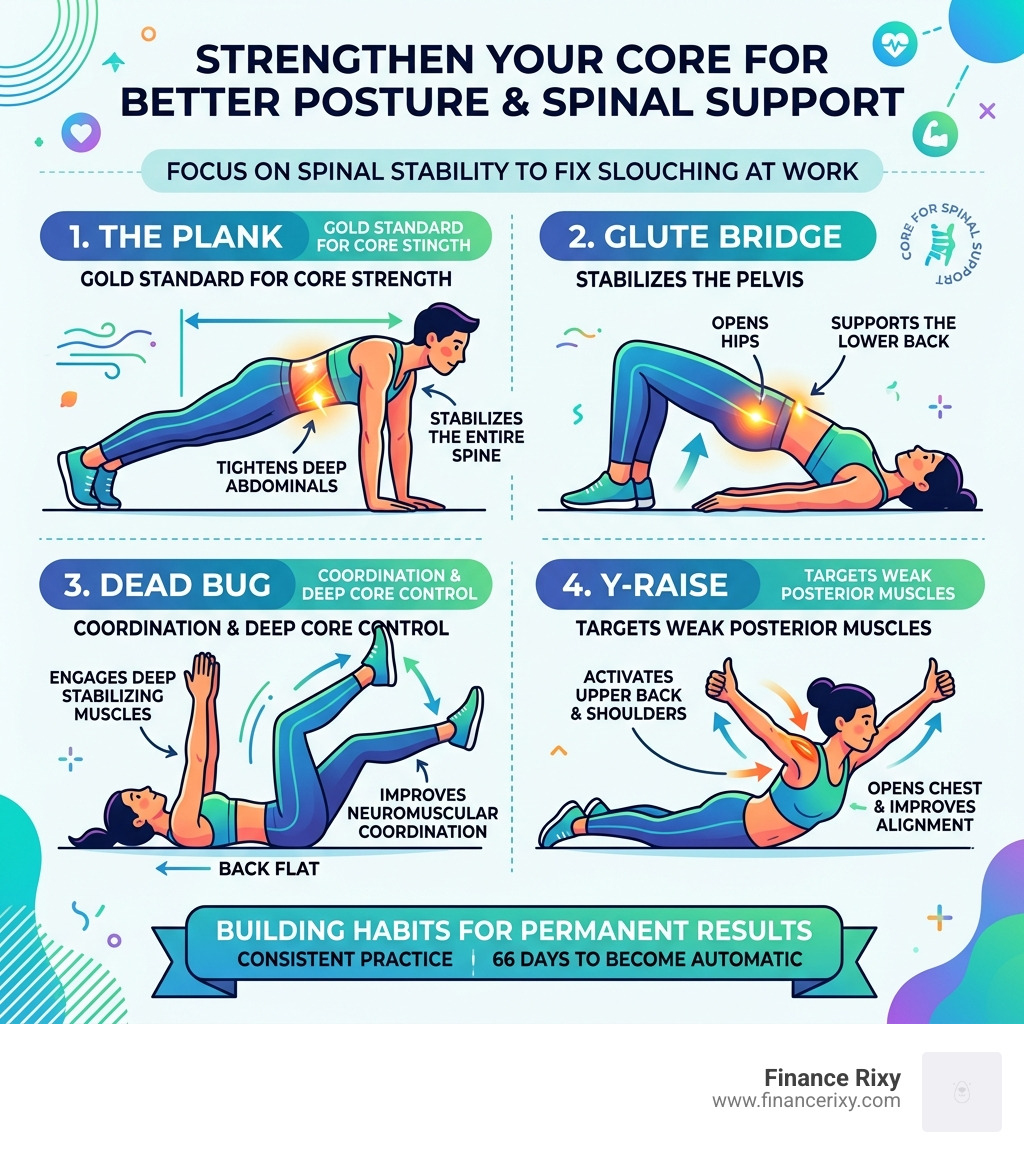
While ergonomics help, the long-term solution to fix slouching at work is strength. Your “posterior chain”—the muscles along your back, glutes, and hamstrings—is what keeps you upright. If these muscles are weak, you will eventually slump, no matter how nice your chair is.
We recommend focusing on “spinal stability” exercises. Planks are the gold standard for core strength, but don’t forget glute bridges and dead bugs to stabilize the pelvis. Y-raises (lying on your stomach and lifting your arms into a Y shape) are incredible for targeting the weak muscles between your shoulder blades.
Habit formation takes time. While some say it takes 21 days, research suggests it’s closer to 66 days for a complex habit like posture to become automatic. Be patient with yourself.
Frequently Asked Questions About Posture Correction
How long does it take to see results from posture exercises?
Most of our readers report feeling less tension within just 2-4 weeks of consistent stretching. However, for significant, permanent changes in your default sitting position, expect to put in 6-12 weeks of effort. This gives your muscles time to adapt and your “muscle memory” time to reset.
Is it normal to feel discomfort when first correcting my posture?
Yes! Think of it like training for a marathon. Your body has become used to the “slouch,” and as you begin to engage muscles that have been “asleep” for years, they will get sore. This is normal structural adjustment. Just ensure the discomfort is a dull muscle ache and not a sharp, radiating pain.
When should I seek professional help for slouching or pain?
If you experience numbness, tingling in your hands, or pain that radiates down your legs, it’s time to see a professional. Persistent stiffness that doesn’t improve with stretching or ergonomic changes may require a physical therapist or a formal ergonomic assessment.
Conclusion
By April 2026, we hope that “the desk slump” is a thing of the past for you. The goal isn’t to sit perfectly still like a statue. The human body is built for movement. By optimizing your workspace, performing desk-friendly stretches, and strengthening your core, you are doing more than just sitting up straight—you are saving your spine and boosting your long-term health.
At Finance Rixy, we believe that small daily habits lead to massive wellness transformations. Don’t wait for the pain to become unbearable. Start with one change today—maybe it’s the towel technique or a simple chin tuck.
Start your wellness journey with Finance Rixy and let’s make good posture your new default. Your spine is quietly rooting for you. Don’t let it down!
