
The Best Daily Mobility Routine for Beginners
Why Stiffness Is Stealing Your Day (And What to Do About It)
Daily mobility improvement stretches are controlled movements that take your joints through their full range of motion — and just 10 to 20 minutes a day can meaningfully reduce stiffness, improve posture, and protect your joints long-term.
Here are the most effective daily mobility improvement stretches to start with:
- Cat-Cow — loosens the spine, reduces lower back tension
- 90/90 Hip Switches — opens tight hips from prolonged sitting
- World’s Greatest Stretch — targets hips, hamstrings, and thoracic spine in one move
- Shoulder CARs (Controlled Articular Rotations) — restores shoulder range and control
- Neck Rotations — relieves desk-induced neck stiffness
- Deep Squat Hold — improves ankle, hip, and lower back mobility
- Thread the Needle — unlocks thoracic spine rotation
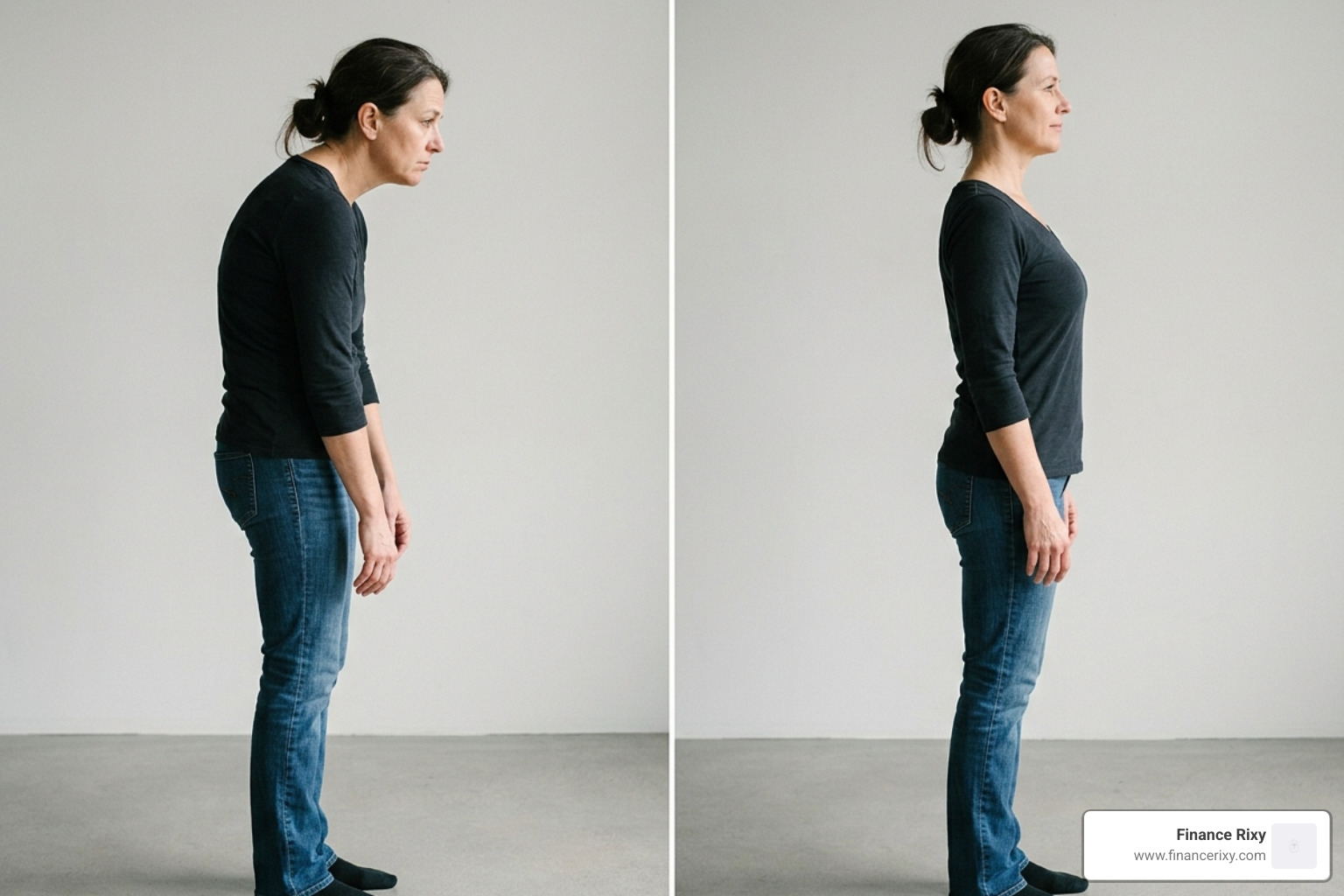
If you spend most of your day at a desk, your body is paying a quiet price. Tight hips, a stiff lower back, rounded shoulders — these aren’t just minor annoyances. Over time, they compound into real pain and reduced movement quality.
Here’s what makes this worse: you may lose 5–20% of your flexibility per decade after age 30, depending on your activity level. That’s not inevitable — but it does mean waiting to act costs you more each year.
The good news? You don’t need a gym, a trainer, or an hour of free time.
Research consistently shows that as little as 10 minutes of daily mobility work can improve joint health, reduce chronic tension, and help you move more freely in everyday life. Think of it less like a workout and more like a movement vitamin — a small, consistent dose that keeps your body functioning well.
This guide walks you through everything: what mobility actually means, a simple beginner routine, targeted stretches for problem areas like hips and shoulders, and how to build the habit so it sticks.
Why Daily Mobility Improvement Stretches are Essential in 2026
As we move through April 2026, the fitness world has shifted its focus. We’ve moved away from “no pain, no gain” and toward “functional longevity.” We want to be able to pick up our grandkids, reach the top shelf, and sit at our desks without feeling like we’re made of rusted iron.
But before we dive into the routine, we need to clear up some common confusion. Many people use the terms mobility, flexibility, and stretching interchangeably, but they aren’t the same thing.
Mobility vs. Flexibility vs. Stretching
Understanding these differences is the secret to “bulletproofing” your body.
| Feature | Stretching | Flexibility | Mobility |
|---|---|---|---|
| Definition | The act of lengthening a muscle. | The passive range of motion of a joint. | The ability to actively control a joint through its full range. |
| Example | Touching your toes (passive). | How far someone can push your leg up. | Doing a deep, controlled squat (active). |
| Goal | Temporary muscle relaxation. | Increased muscle length. | Functional movement and joint health. |
The Science of Staying Supple
Why is this so urgent? Statistics show that healthy adults should engage in flexibility exercises for all major muscle-tendon groups at least 2–3 times a week. However, for those of us over 30, the clock is ticking. You can lose between 5% and 20% of your flexibility every decade if you remain sedentary.
Furthermore, a 2021 study published in PeerJ found that individuals who scored higher on mobility screening tests were six times less likely to get injured. By practicing daily mobility improvement stretches, you aren’t just getting “bendy”—you are training your nervous system to allow your joints to move safely. This is often called “neuromuscular control.”
The 60-Second Rule
The American College of Sports Medicine (ACSM) suggests that for optimal results, you should spend a total of 60 seconds on each stretching exercise. You don’t have to do it all at once; you can break it into four 15-second reps or three 20-second holds. Consistency is the magic ingredient here.
Core Benefits of a Daily Routine:
- Reduced Chronic Pain: Especially in the lower back, neck, and shoulders.
- Improved Athletic Performance: Better squat depth and running form.
- Injury Prevention: Healthy joints handle unexpected stress better.
- Healthy Aging: Maintaining the ability to twist, reach, and bend into old age.
- Better Circulation: Movement helps move blood and nutrients to your tissues.
The 10-Minute Full-Body Mobility Routine
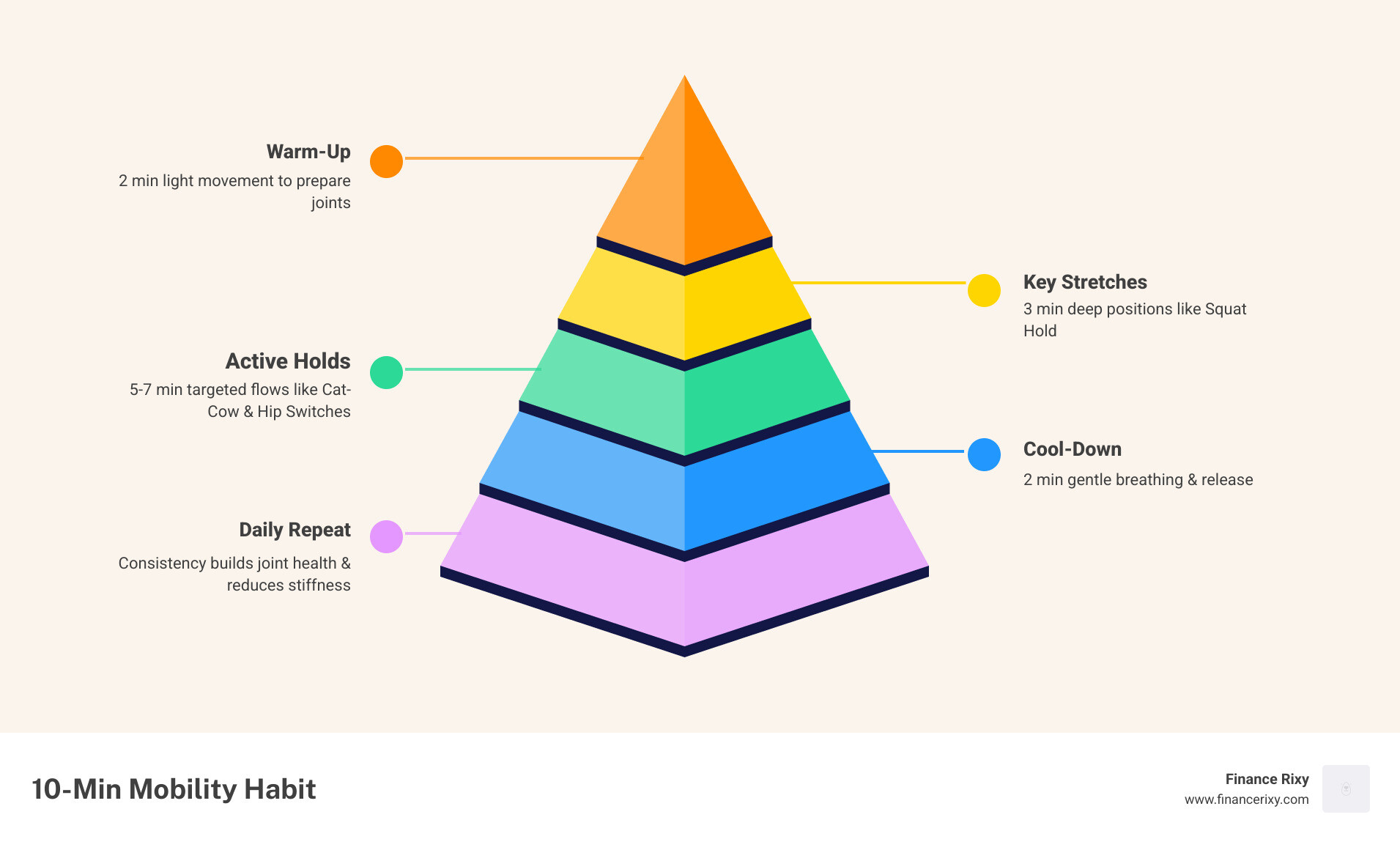
We know what you’re thinking: “I don’t have time for another hour-long workout.” The beauty of a mobility routine is that it fits into a 10-to-20-minute window. It’s a “movement snack” you can do in your pajamas before your morning coffee or right before bed to unwind your nervous system.
Setting Up Your Space
You don’t need a fancy home gym. A small patch of floor space and comfortable clothes are enough.
- Minimal Equipment: A yoga mat is helpful for cushioning.
- Optional Tools: A foam roller or massage ball can help with “fascia pliability”—think of it like smoothing out “sticky plastic wrap” inside your muscles.
- The Vibe: Focus on slow, intentional movements. Use deep, controlled breathing to switch your body into “parasympathetic mode” (rest and digest), which helps your muscles relax and lengthen.

Step-by-Step Movement Flow
Follow this flow daily to see results in as little as 1–2 weeks.
- Cat-Cow (1 minute): Get on all fours. Inhale as you drop your belly and look up (Cow). Exhale as you arch your back and tuck your chin (Cat). This “wakes up” the spine.
- 90/90 Hip Switches (2 minutes): Sit on the floor with your knees bent at 90-degree angles, one leg in front and one to the side. Slowly rotate your knees to the opposite side without lifting your feet. This is a game-changer for tight “desk hips.”
- World’s Greatest Stretch (2 minutes): From a plank, step your right foot outside your right hand. Drop your right elbow toward the floor, then reach that same hand toward the ceiling, twisting your torso. Switch sides.
- Thoracic Rotations (1 minute): On all fours, place one hand behind your head. Rotate your elbow toward your opposite wrist, then open up toward the ceiling.
- Ankle Rocking (1 minute): In a half-kneeling position, lean forward over your front foot, keeping your heel on the ground. This improves the “ankle dorsiflexion” needed for better walking and squatting.
- Controlled Articular Rotations (CARs) (3 minutes): Slowly draw the largest possible circle with your shoulders and neck. Move as if you are moving through honey—slow and controlled.
How to Track Your Daily Mobility Improvement Stretches
How do you know it’s working? We recommend a “Test and Retest” method:
- Toe Touch Test: How close can you get to your toes?
- Deep Squat Assessment: Can you sit in a squat without your heels lifting or your back rounding?
- Overhead Reach: Can you lift your arms straight up without arching your back?
- Progress Journaling: Note how you feel. Are you less “creaky” when you get out of bed?
- Video Filming: Record yourself once a month. You’ll be surprised at how much your range of motion increases!
Targeted Stretches and Lifestyle Adaptations
Not everyone has the same “tight spots.” A desk worker has different needs than a senior or someone recovering from a knee injury.
The “Stealth Stretch” for Desk Workers
If you’re stuck in meetings, you can still work on your mobility. Simple ankle circles under your desk or seated neck tilts can prevent fascia from tightening up. Remember: “Motion is lotion.”
Targeted Stretches for Hips and Shoulders
- Couch Stretch: This is the “boss” of hip flexor stretches. Place one knee on the floor (or a couch cushion) with your foot tucked up against the back of the couch. Squeeze your glutes and stay upright. It counters the “shortening” that happens to your hips when you sit.
- Shin Box Get-Ups: From the 90/90 position, drive your knees into the mat and lift your hips until you are kneeling. This activates the glutes, which are often “asleep” in desk workers.
- Wall Slides: Stand with your back against a wall. Lift your arms into a “goalpost” position and slide them up and down without letting your ribs flare or your back leave the wall. This fixes rounded “tech neck” shoulders.
Spine, Neck, and Ankle Health
- Chin Tucks: Gently pull your head back (creating a double chin) to realign your cervical spine.
- Thread the Needle: From all fours, slide one arm under your body to stretch the back of your shoulder and your upper spine.
- Standing Windmills: Stand with feet wide, reach one hand toward the opposite foot while the other hand reaches for the sky. This combines core stability with hamstring and spine mobility.
Optimizing Your Practice: Timing, Safety, and Progress
When is the best time to perform your daily mobility improvement stretches?
- Morning: Great for shaking off overnight stiffness and “front-loading” your wellness for the day.
- Pre-Workout: Essential for “priming” your joints so you can lift or run with better form.
- Evening: Perfect for recovery. Stretching before bed can lower cortisol and improve sleep quality.
Safety First: Pushing vs. Pain
There is a big difference between “beneficial discomfort” and “harmful pain.” You should feel a deep stretch or a bit of work in the muscles, but you should never feel sharp, stabbing, or radiating pain. If a joint feels unstable or pinches, back off.
Common Mistakes to Avoid:
- Bouncing: Avoid “ballistic” stretching. Keep it smooth and controlled.
- Holding Your Breath: If you stop breathing, your nervous system thinks you’re in danger and tightens your muscles to protect you.
- Inconsistency: Doing 60 minutes once a week is far less effective than doing 10 minutes every day.
- Comparing Yourself: Your journey is unique. Don’t worry if you can’t touch your toes on day one.
Results Timeline
Most beginners feel “looser” after just one session. However, real structural change takes time.
- 1–2 Weeks: Improved posture and reduced daily “niggles” or aches.
- 4 Weeks: Noticeable increase in range of motion (e.g., deeper squats).
- 3 Months: Lasting changes in how you move and a significant reduction in injury risk.
Frequently Asked Questions about Daily Mobility Improvement Stretches
How often should I perform mobility exercises?
Ideally, every day! Think of it like brushing your teeth for your joints. If daily feels overwhelming, aim for at least 2–3 times a week to meet ACSM guidelines. We recommend “habit stacking”—do your stretches while your coffee brews or while watching the evening news.
Do I need expensive equipment to start?
Absolutely not. Your own body weight is your best tool. You can use household items like a sturdy chair for balance or a rolled-up towel as a yoga block. While resistance bands and foam rollers are great additions later on, they aren’t required to start seeing results today.
Can mobility training help with chronic back pain?
Yes, in many cases. Much of our back pain comes from “compensatory movements”—because our hips or ankles are stiff, our lower back has to do extra work. By unlocking your hips and isolating your glutes, you take the pressure off your spine. However, always consult a professional if you have a diagnosed spinal condition.
For more personalized advice on improving your physical well-being through daily habits, you can find More info about wellness services.
Conclusion
At Finance Rixy, we believe that your health is your greatest asset. Investing 10 minutes a day into daily mobility improvement stretches is one of the highest-return activities you can perform for your future self.
By April 2026, the goal isn’t just to live longer—it’s to move better. Whether you are a desk worker trying to escape shoulder tension or an athlete looking for a new edge, mobility is the foundation. Start small, stay consistent, and listen to your body. You’ll be amazed at how quickly “stiff and creaky” turns into “fluid and free.”
Ready to reclaim your movement? Start your journey with Finance Rixy and discover how simple daily habits can transform your physical well-being.
