
Why Sitting All Day Makes Leg Stretches at Desk Essential
Leg stretches at desk are one of the simplest things you can do to protect your body from the damage of prolonged sitting.
Here are the most effective leg stretches you can do right at your desk:
| Stretch | Position | Target Muscle(s) | Hold Time |
|---|---|---|---|
| Seated Hamstring Stretch | Seated | Hamstrings | 15-30 sec |
| Figure-Four Stretch | Seated | Glutes, Piriformis | 15-30 sec |
| Ankle Circles | Seated | Calves, Ankles | 10 reps each direction |
| Seated Leg Lift | Seated | Hip Flexors, Quads | 10-15 sec |
| Standing Calf Stretch | Standing | Calves, Achilles | 15-30 sec |
| Hip Flexor Stretch | Standing | Hip Flexors | 30-60 sec per side |
| Chair Pose / Hover Stretch | Standing | Glutes, Core, Legs | 15-30 sec |
Most office workers spend 8 or more hours a day sitting. That’s not just uncomfortable — it’s a real health risk.
A large study of 8,000 adults found that prolonged sitting raises your risk of heart disease, cancer, diabetes, and even early death. And it starts with your legs and hips.
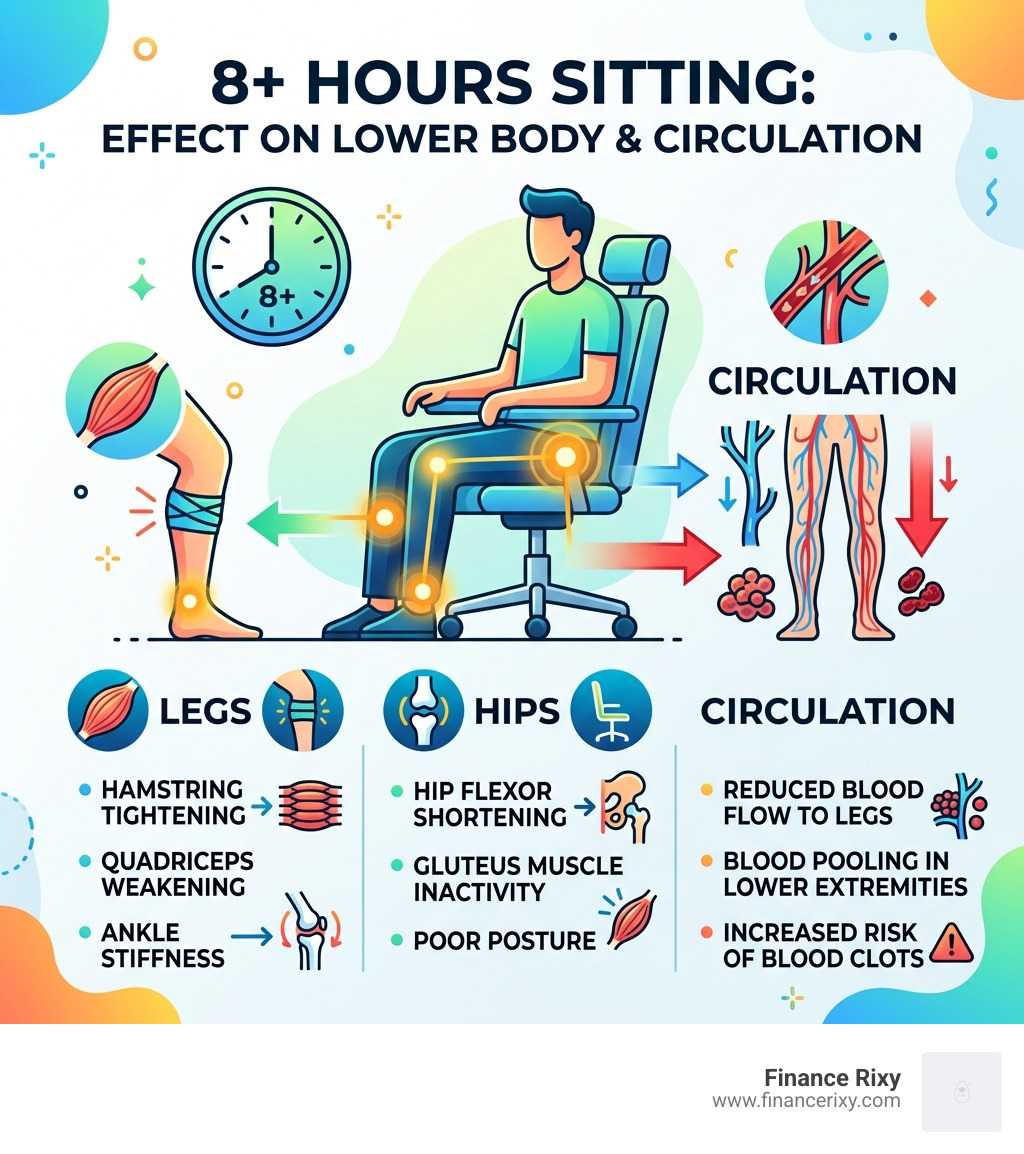
When you sit for hours, your hip flexors shorten. Your glutes stop firing. Your hamstrings tighten. Blood flow to your lower legs slows down. Over time, this creates pain, stiffness, and poor posture that follows you off the clock too.
The good news? You don’t need a gym. You don’t need equipment. You just need a few minutes and your chair.
Experts recommend moving for one to three minutes every 30 to 45 minutes to counter the effects of sitting. The stretches in this guide fit right into that window — no sweat required.
Why You Need Leg Stretches at Desk
As we move through April 2026, the data on sedentary lifestyles has never been clearer. We are sitting more than ever, and our bodies are paying the price. According to research on prolonged sitting risks, the human body simply wasn’t designed to stay in a 90-degree folded position for eight hours a day.
The Science of the “Sitting Slump”
When we sit, our leg muscles essentially go into a state of hibernation. This lack of movement leads to several physiological issues:
- Muscle Atrophy and Weakness: When muscles aren’t used, they lose their tone. This is particularly true for the glutes, a phenomenon often called “gluteal amnesia.”
- Circulation Issues: Sitting still for too long makes it harder for blood to return from your feet and ankles back to your heart.
- Lower Cross Syndrome: This is a postural imbalance where the hip flexors and lower back muscles become overactive and tight, while the glutes and abdominals become weak and inhibited.
- Hip Flexor Shortening: Your psoas and iliacus muscles are constantly “on” and in a shortened state while you sit, which can pull on your lower back and cause chronic pain.
Active vs. Sedentary Muscle Engagement
To visualize the impact, consider how your muscles behave in different states:
| Muscle Group | While Standing/Walking | While Sitting at a Desk |
|---|---|---|
| Glutes | Active; stabilizing the pelvis | Inactive; stretched and “turned off” |
| Hip Flexors | Dynamic; lengthening and shortening | Shortened; tight and constricted |
| Hamstrings | Flexible; supporting movement | Compressed; often tight and stiff |
| Calves | Pumping blood back to the heart | Static; prone to swelling/stiffness |
By performing leg stretches at desk, we can prevent these issues from becoming permanent. Regular movement is also a key factor in sciatica prevention, as it keeps the piriformis muscle from tightening and pressing on the sciatic nerve.
7 Effective Leg Stretches at Desk
To get the most out of these movements, we want to focus on muscle activation and improving our range of motion. These stretches aren’t just about flexibility; they are about encouraging blood return and waking up the nervous system.
Seated Leg Stretches at Desk for Immediate Relief
You don’t even have to stand up to start feeling better. These seated options are perfect for when you’re on a long conference call or deep in a spreadsheet.
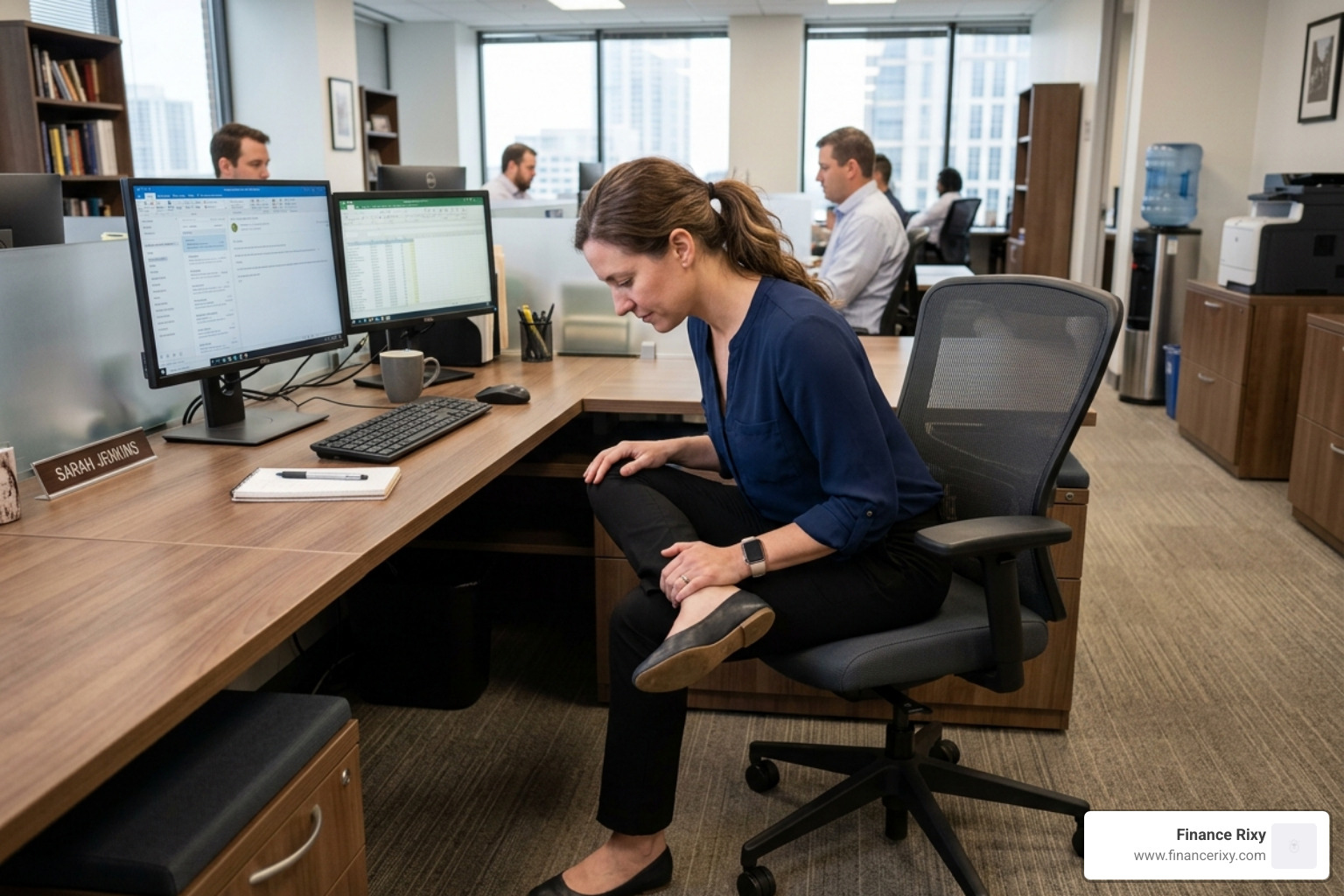
- Seated Figure-Four (Piriformis Release): Sit tall in your chair. Cross your right ankle over your left knee. Keeping your back straight, gently hinge forward from your hips until you feel a stretch in your right glute. Hold for 15–30 seconds and switch sides. This is the ultimate “deskercise” for hip pain.
- Seated Hamstring Stretch: Sit at the very edge of your chair. Extend one leg out straight with your heel on the floor and toes pointing up. Keep your back straight and lean forward slightly from the hips. You’ll feel this down the back of your thigh.
- Ankle Circles: This one is great for circulation. Lift one foot off the floor and rotate your ankle 10 times clockwise, then 10 times counter-clockwise. This encourages blood to move from your lower legs back toward your heart.
- Seated Leg Lifts: To wake up your quads and hip flexors, sit tall and straighten one leg out in front of you. Hold it for 5–10 seconds, then slowly lower. Repeat 5 times per leg.
- Knee-to-Chest: While seated, grasp your shin and gently pull one knee toward your chest. Hold for 15 seconds to release tension in the lower back and hip.
- Inner Thigh Stretch: Sit on the edge of your chair and open your legs wide, toes pointing out. Gently lean forward to feel a stretch along the inner thighs.
- Seated Thoracic Rotation: While this targets the back, it helps the hips by unbinding the torso. Twist your upper body to the right, using the chair’s armrest for leverage, then repeat on the left.
Standing Leg Stretches at Desk for Maximum Mobility
Getting out of your chair is the best way to reset your posture. If you have a standing desk, these are even easier to incorporate.
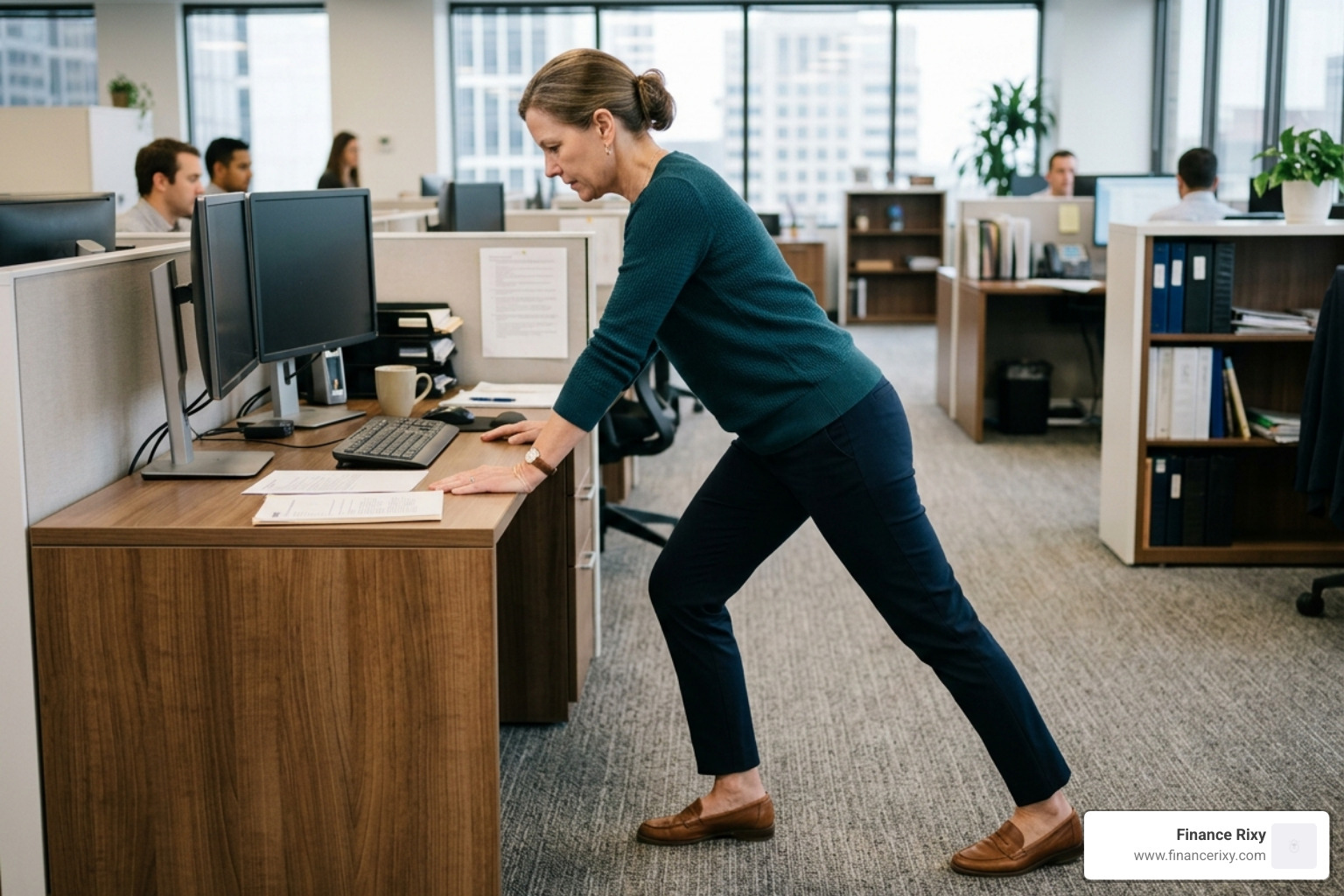
- Standing Calf Stretch: Stand facing your desk. Step one foot back, keeping the heel flat on the floor and the leg straight. Lean forward into the desk until you feel the stretch in your back calf.
- Standing Hip Flexor Stretch: Step one foot forward into a small lunge. Tuck your pelvis under (think of flattening your lower back) and shift your weight forward slightly. You should feel this in the front of the hip of the back leg.
- Stair-Step Calf Raises: If you have a step nearby, stand with your toes on the edge and let your heels hang off. Drop the heels down for a stretch, then rise up onto your toes to activate the muscle.
- Chair Pose (Hover Stretch): Stand in front of your chair as if you’re about to sit. Lower your hips until they are just hovering above the seat. Reach your arms forward and hold for 15–30 seconds. This wakes up the glutes and quads instantly!
- Quadriceps Stretch: Stand on one leg (hold the desk for balance). Reach back and grab your ankle, pulling your heel toward your glute. Keep your knees close together.
Safety Tips and Common Mistakes to Avoid
We want you to feel better, not end up with a strain. According to 5 Lower Body Stretches To Do At Your Desk, there are a few “golden rules” for safe stretching.
- Stop Bouncing: Avoid “ballistic” movements. Bouncing in a stretch can cause small tears in the muscle. Instead, use smooth, static holds.
- Breathe Normally: Many people hold their breath when they feel tension. This tells your nervous system to tighten up. Exhale as you lean into the stretch to help the muscle relax.
- Respect the Pain Threshold: A stretch should feel like “comfortable tension.” If you feel sharp, stabbing, or radiating pain, stop immediately.
- Don’t Stretch Cold Muscles: If you’ve been frozen in place for three hours, your muscles are “cold.” Do 30 seconds of marching in place or some ankle circles before diving into a deep hamstring stretch.
- Maintain Symmetry: Always stretch both sides of the body equally to prevent postural imbalances.
- Consult a Pro: If you have had recent hip, knee, or ankle surgery, check with your doctor before starting a new routine.
How to Build a Desk Stretching Routine
The hardest part of leg stretches at desk isn’t the movement itself—it’s remembering to do it. Consistency is the key to long-term mobility.
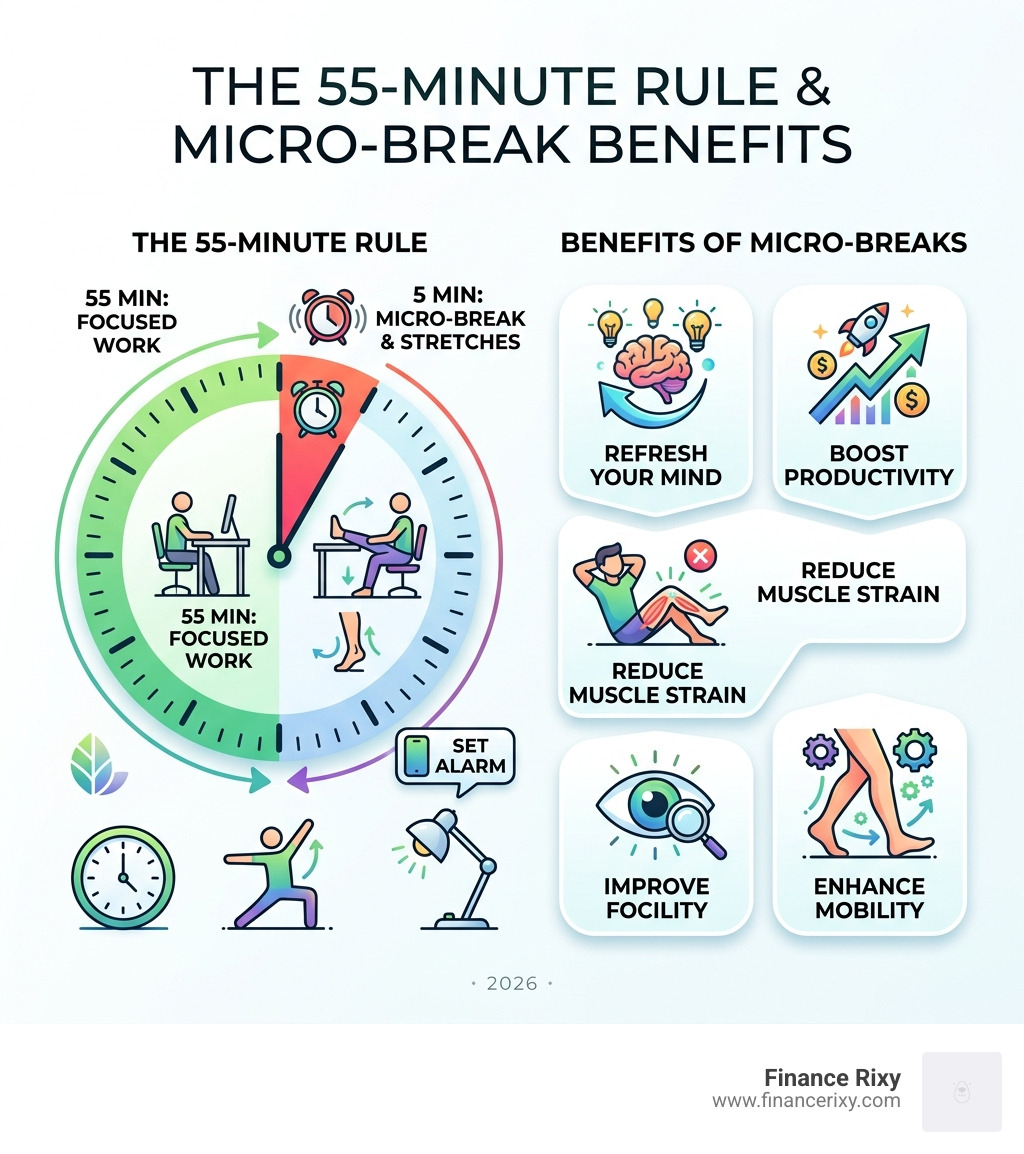
The 55-Minute Rule
A great way to stay consistent is to set an alarm to go off every 45 to 55 minutes. When the timer hits, spend 5 minutes doing 2 or 3 of the stretches listed above. This “micro-break” approach is proven to reduce muscle strain and actually boost productivity by refreshing your mind.
Habit Stacking
Try “stacking” your stretches with existing habits:
- The “Phone Call” Stretch: Stand up and do calf raises every time you are on a voice call.
- The “Email” Reset: Every time you hit “Send” on a long email, do 10 ankle circles.
- The “Meeting” Move: If you’re in a meeting where your camera is off, perform the seated figure-four stretch.
Ergonomic Support
While stretching is vital, your environment matters too. Finance Rixy recommends looking into ergonomic furniture, such as adjustable standing desks or footrests, to keep your legs in a more neutral position. Also, stay hydrated! Dehydrated muscles are more prone to cramping and stiffness.
Frequently Asked Questions about Leg Stretches at Desk
How often should I perform these stretches?
Ideally, you should aim for a “flexibility break” every hour. Experts recommend at least 1–3 minutes of movement every 30 to 45 minutes to counter the effects of prolonged sitting. At a minimum, try to perform a full set of these stretches twice a day—once in the morning and once after lunch.
Can these stretches reduce lower back pain?
Yes! Most lower back pain in office workers is actually caused by tight hip flexors and hamstrings. When these muscles are tight, they pull on the pelvis, which in turn creates tension in the lumbar spine. By loosening the lower body, you take the pressure off your back.
What should I do if a stretch causes sharp pain?
Sharp or shooting pain is a signal to stop. This is different from the “dull ache” of a tight muscle being stretched. If you experience sharp pain, it could indicate a nerve issue or a muscle tear. Discontinue the stretch and consult a medical professional if the pain persists.
Conclusion
At Finance Rixy, we believe that small daily habits lead to massive long-term health gains. Incorporating leg stretches at desk isn’t just about avoiding a stiff afternoon—it’s about protecting your heart, your posture, and your overall physical well-being for years to come.
By breaking up your sedentary strain with targeted mobility work, you’ll find you have more energy, less pain, and a much more productive workday. Start today: set that 55-minute timer and give your legs the break they deserve.
