
6 Essential Moves to Build a Stronger and Pain-Free Neck
Why Your Neck Deserves More Attention Than You’re Giving It
Neck stretches build strength by increasing muscle fiber activation, improving range of motion, and training the deep cervical muscles that hold your head upright all day.
Here’s a quick summary of how neck stretches help you build strength:
- Improve muscle endurance – holding stretches under tension trains muscles to resist fatigue
- Activate deep stabilizers – movements like chin tucks engage the deep cervical flexors that support your spine
- Increase range of motion – mobile muscles work more efficiently and are harder to strain
- Relieve chronic tension – regular stretching reduces the stiffness that leads to pain and weakness
- Support better posture – stronger neck muscles keep your head aligned over your shoulders, not sagging forward
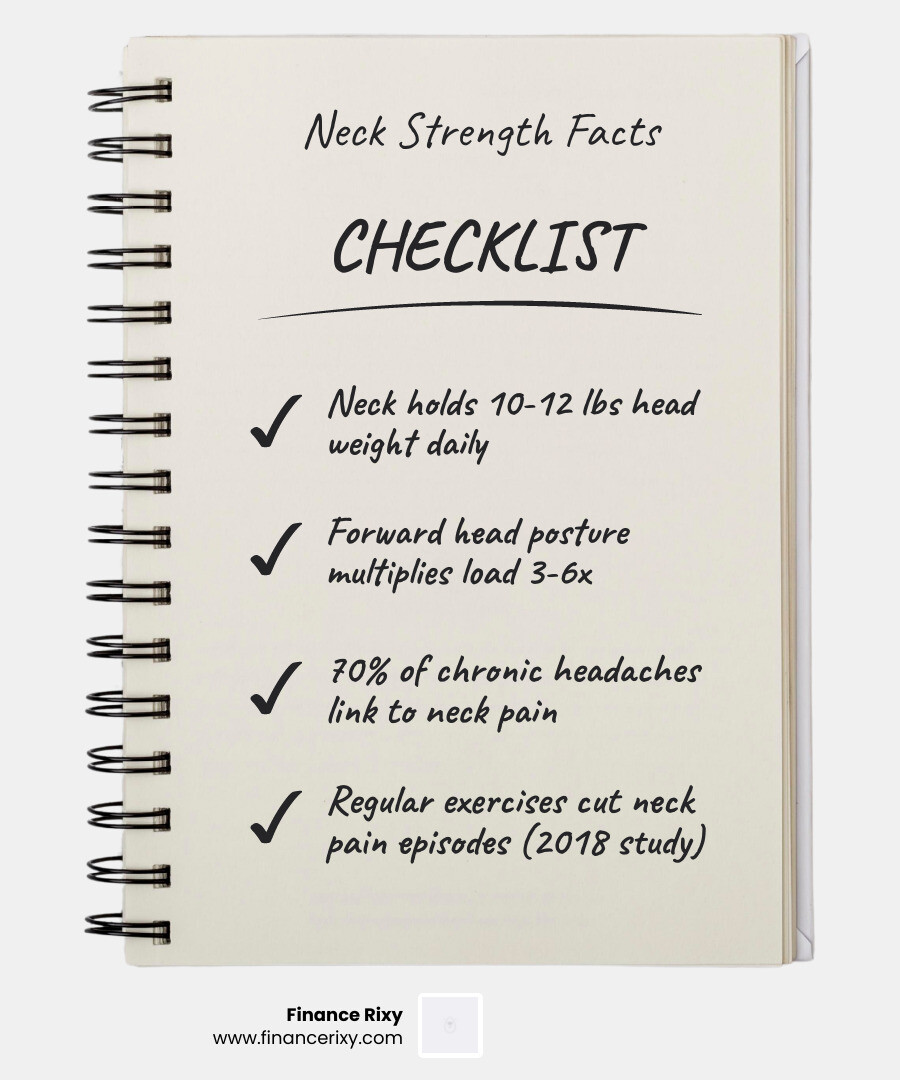
Your neck holds up roughly 10 to 12 pounds of head weight every single day. When you lean forward to look at a screen, that load on your neck muscles increases dramatically. And if those muscles are weak, everything downstream suffers — your shoulders, your upper back, even your headaches.
The numbers back this up. A 2018 review in the Journal of Physiotherapy found that people who did regular neck exercises reported fewer episodes of neck pain. And almost 70% of people with chronic headaches also have neck pain.
The good news? You don’t need a gym. You don’t need equipment. A few targeted moves done consistently can make a real difference — even if you only have five minutes at your desk.
Why Neck Stretches Build Strength and Improve Posture
When we think of “strength training,” we usually picture heavy deadlifts or bicep curls. We rarely think of the delicate stack of seven vertebrae known as the cervical spine. However, your neck is the bridge between your brain and the rest of your body. It houses vital nerves and supports the heavy “bowling ball” that is your head.
The relationship between stretching and strengthening is more intimate than most people realize. When muscles are chronically tight—a common result of “text neck” or poor desk ergonomics—they become “functionally weak.” They lose their ability to contract fully and support your spine. By incorporating stretches that require active engagement, we can effectively ensure our neck stretches build strength while simultaneously restoring mobility.
The Science of Support
Strength training relieves chronic neck pain by addressing the root cause of many cervical issues: muscle atrophy and imbalance. When the deep cervical flexors (the muscles in the front of your neck) become weak, the muscles in the back of your neck have to work overtime to keep your head from falling forward. This leads to that familiar burning sensation between your shoulder blades and tension headaches.
Furthermore, neck strength is a literal lifesaver in high-impact scenarios. Research has shown that every one-pound increase in neck strength reduces concussion risk by 5%. Whether you are an athlete or just someone who wants to be protected in the event of a sudden trip or car accident, a robust neck provides essential impact resistance.
| Feature | Flexibility (Stretching) | Strengthening (Resistance) |
|---|---|---|
| Primary Goal | Increase length of muscle fibers | Increase force production/density |
| Mechanism | Relaxing into a range of motion | Contracting against a load/gravity |
| Daily Benefit | Reduces stiffness and “knots” | Maintains upright posture all day |
| Injury Prevention | Prevents muscle strains | Protects spine and brain (concussions) |
How neck stretches build strength through mobility
It sounds like a paradox, doesn’t it? How does stretching build power? It comes down to functional stability. To change muscle fibers, some experts suggest holding stretches for at least two minutes. During this time, your muscles aren’t just “relaxing”; they are often performing an isometric contraction to stabilize the joint in that new position.
By improving your range of motion, you allow your muscles to work through their full length. A muscle that can only move through half its intended range is a muscle that can only be half as strong as it should be.
The link between neck strength and injury prevention
We often ignore our necks until they hurt, but waiting for pain is a risky strategy. Physical therapist recommended exercises focus on “pre-habilitation”—building a buffer of strength so that daily stressors don’t turn into chronic injuries. Stronger neck muscles act like shock absorbers for the head, protecting the brain and cervical discs from the micro-traumas of daily life.
6 Essential Exercises for a Stronger Neck
To truly see how neck stretches build strength, we need to move beyond simple head rolls. We need movements that challenge the muscles to resist gravity and maintain alignment. Here are our top six moves for a resilient neck.
1. Chin Tucks for Deep Cervical Flexors
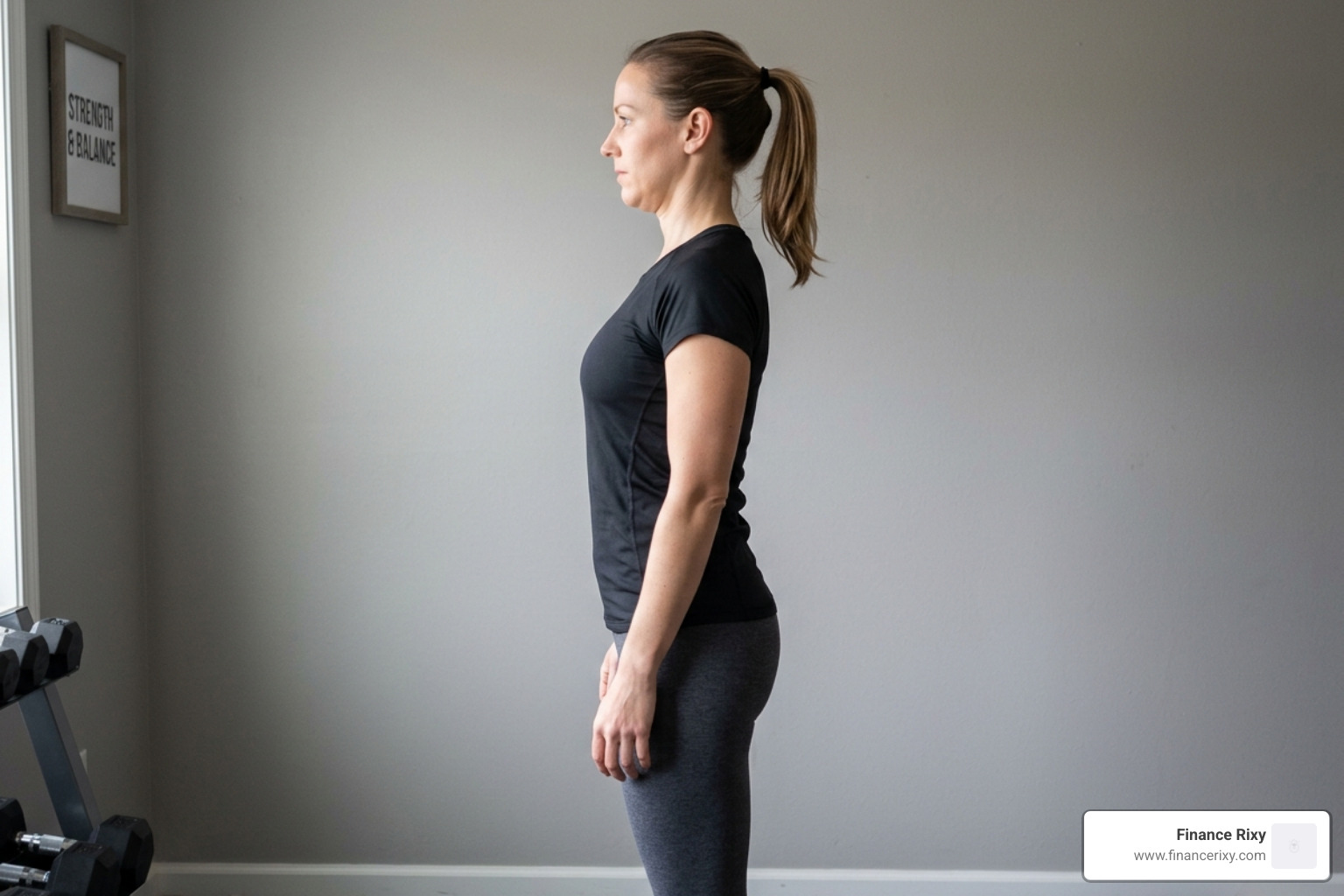
This is the “gold standard” of neck training. It targets the deep cervical flexors, which are almost always weak in anyone who uses a computer or smartphone.
- How to do it: Sit or stand tall, looking straight ahead. Without tilting your head up or down, draw your chin straight back, as if you’re making a “double chin.” Imagine a string pulling the back of your head toward the ceiling.
- The Strength Connection: You are training the muscles that keep your head retracted and aligned.
- Frequency: Hold for 5 seconds; repeat 10 times. You can do this at your desk every hour.
2. Isometric Head Nods
Isometrics are fantastic because they build strength without requiring painful movement in a sensitive joint.
- How to do it: Place your hand on your forehead. Try to nod your head forward while using your hand to provide enough resistance that your head doesn’t actually move.
- The Strength Connection: This activates the front neck muscles (sternocleidomastoid) against resistance.
- Frequency: Press firmly (but not maximally) for 6 seconds; repeat 8 to 12 times.
3. Isometric Head Tilts
These build the lateral strength of the neck, which is vital for side-to-side stability.
- How to do it: Place your right hand on the right side of your head. Try to tilt your ear toward your shoulder while resisting the movement with your hand.
- The Strength Connection: This targets the scalenes and upper trapezius.
- Frequency: Hold the contraction for 6 seconds; repeat 8 to 12 times on each side. For more advanced exercises for neck thickness, you can eventually transition to using light weight plates, but start with your hand first!
4. Prone Cobra for Upper Back Integration
The neck doesn’t live in a vacuum; it’s attached to your upper back. To fix the neck, you must stabilize the shoulders.
- How to do it: Lie face down on the floor with a small towel under your forehead. Place your arms at your sides, palms down. Pinch your shoulder blades together and lift your hands off the floor. Roll your elbows in, palms out, and thumbs up. Lift your forehead just an inch off the towel while keeping your eyes on the floor.
- The Strength Connection: This is excellent for strengthening postural muscles like the thoracic extensors.
- Frequency: Hold for 10 seconds; repeat 10 times.
5. Scapular Wall Slides
This move teaches your neck and upper back to work together while staying in a neutral position.
- How to do it: Stand with your back, head, and heels against a wall. Raise your arms so your elbows and the backs of your hands touch the wall at shoulder height. Slowly slide your hands up above your head, keeping contact with the wall, then slide back down.
- The Strength Connection: This forces the neck to stay retracted while the shoulder stabilizers are under load.
- Frequency: 10 repetitions, 3 times per day.
6. The Superman
While often thought of as a lower back exercise, the Superman is a powerhouse for the entire posterior chain, including the neck.
- How to do it: Lie on your stomach with arms extended in front of you. Simultaneously lift your arms, chest, and legs off the floor. Crucially, keep your neck in a neutral position—don’t look up! Look at the floor about a foot in front of you.
- The Strength Connection: This works the neck muscles against gravity in a long-lever position.
- Frequency: Hold for 10–30 seconds; repeat 3 times.
Safety and Progression Guidelines
We want you to feel stronger, not sorer. When you start a routine where neck stretches build strength, you must listen to your body’s feedback.
The 0–10 Pain Scale
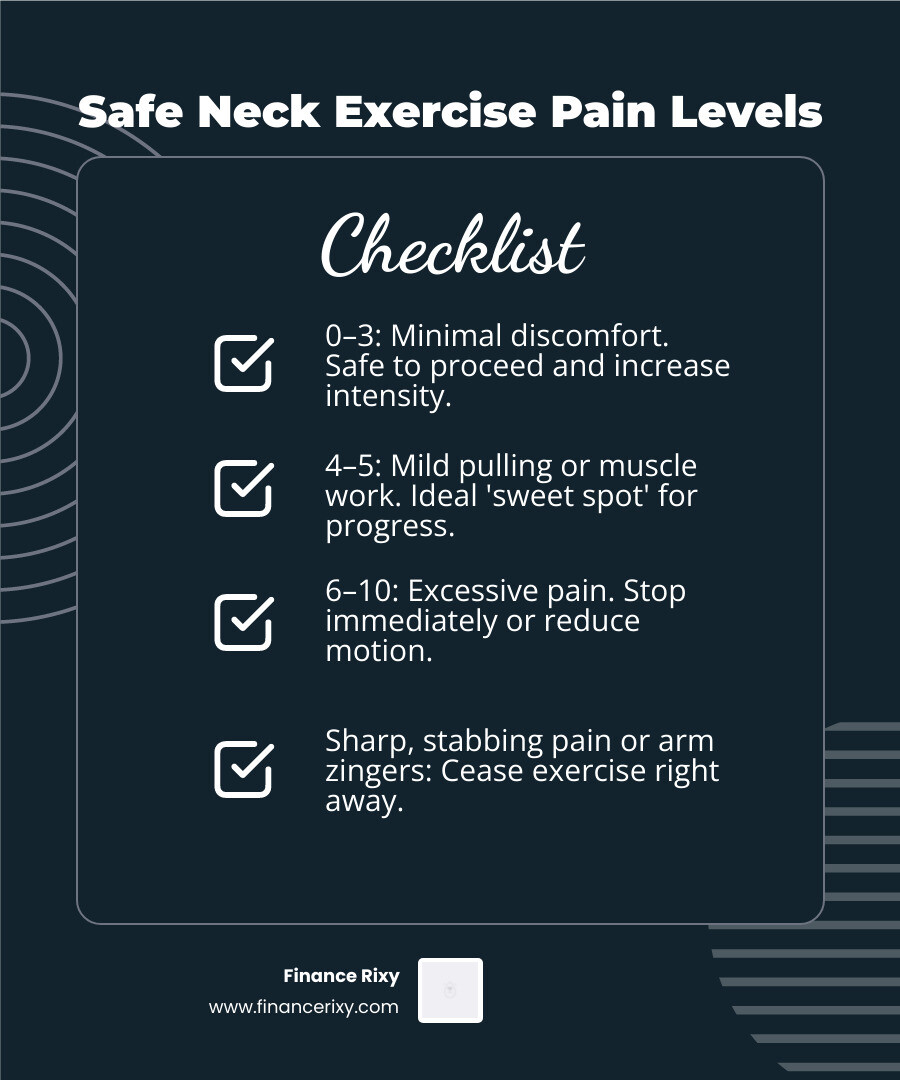
When performing these moves, aim for a pain level between 0 and 5.
- 0–3 (Minimal): Safe to proceed and increase intensity.
- 4–5 (Acceptable): A mild “pulling” or muscle-work sensation. This is the sweet spot.
- 6–10 (Excessive): Stop or reduce the range of motion. If you feel sharp, stabbing pain or “zingers” down your arm, cease the exercise immediately.
How often should neck stretches build strength?
Consistency beats intensity every time. We recommend breaking your training into “5-minute chunks” throughout the day.
- Morning: 10 Chin Tucks to “wake up” the stabilizers.
- Mid-day: Isometric tilts and nods to combat desk fatigue.
- Evening: Prone Cobra or Superman to reset your posture after a long day.
Starting with 2–3 repetitions of each move and gradually adding 1–2 reps every few days is a safe way to progress. Your goal is to reach about 10–15 controlled repetitions for each exercise.
Common mistakes when using neck stretches to build strength
- Shoulder Shrugging: People often “cheat” by shrugging their shoulders up to their ears during a stretch. Keep your shoulders down and relaxed.
- Forcing Movement: Never “bounce” (ballistic stretching). Use slow, smooth motions.
- Holding Your Breath: This creates internal pressure and tension. Breathe deeply and slowly into the areas that feel tight.
- Incorrect Eye Line: In exercises like the Prone Cobra or Superman, people tend to look forward. This “cranks” the neck. Keep your gaze down to maintain a neutral spine.
Frequently Asked Questions about Neck Training
How long until I see results?
The neck is unique because its muscles are often quite underdeveloped. This means most people experience “newbie gains” very quickly. You may notice a reduction in tension and fewer headaches within the first 2 weeks. For visible changes in neck thickness or significant postural shifts, an 8-to-10-week timeline is more realistic. By 6 months of consistency, the changes will likely be permanent.
Do I need special equipment?
Absolutely not. Most of the best moves for the neck use your own body weight or manual resistance from your hands. As you progress, you can use a rolled-up towel for “Towel Pulls” to provide a fulcrum for stretching, or simple resistance bands for “Neck Retractions.” But to start, your own two hands are your best gym equipment.
When should I see a doctor?
While most neck stiffness is harmless, we recommend consulting a professional if:
- Your pain is the result of a specific injury (like a car accident or fall).
- You experience numbness, tingling, or weakness in your arms or hands.
- Your symptoms haven’t improved after 6 weeks of consistent gentle exercise.
- You have a fever, nausea, or extreme sensitivity to light along with a stiff neck (this could indicate a more serious condition like meningitis).
For those with existing conditions, checking out stretches for pain relief can provide a safe starting point, but always clear new routines with your GP first.
Conclusion

At Finance Rixy, we believe that your physical well-being is your greatest asset. Building a stronger neck isn’t just about looking better or hitting a PR in the gym; it’s about the daily habits that allow you to work, play, and live without the constant shadow of chronic pain.
When neck stretches build strength, they give you the foundation to maintain better posture, reduce the frequency of tension headaches, and protect yourself from future injuries. Whether it’s doing five chin tucks while waiting for your coffee to brew or a plank during your lunch break, these small investments yield massive dividends for your health.
Ready to take your mobility to the next level? Explore more info about wellness services and discover how simple, daily movements can transform your quality of life. Your neck supports your head—let us support you.
