
Straighten Up with These Workplace Posture Fixes
Why Lordosis Correction Stretches Work — and What That Means for Your Back
Lordosis correction stretches work by lengthening the tight muscles — mainly your hip flexors and lower back extensors — that pull your pelvis forward and force your lower spine into an excessive arch.
Here’s the quick answer if you need it now:
Do lordosis correction stretches actually work?
- Yes. A meta-analysis of 10 studies (482 participants) found corrective exercises produced a statistically significant, moderate reduction in lumbar lordotic angle (SMD = 0.550, p < 0.001).
- Stretches targeting hip flexors and hamstrings reduce the forward pelvic tilt that causes the arch.
- Stretches work best when paired with strengthening moves for the glutes, core, and hamstrings.
- Most people notice pain and function improvements within 2-4 weeks. Visible postural changes take 8-12 weeks of consistency.
- Corrective programs ranged from 2 to 12 weeks in the research — short timelines with real results.
If you spend most of your day sitting at a desk, there’s a good chance your lower back is slowly pulling into a deeper and deeper arch. You might not even feel it yet. But over time, that excessive curve — called hyperlordosis — puts steady pressure on your spinal joints, discs, and surrounding muscles.
The good news? This is one of the most correctable postural problems out there. And you don’t need surgery, a back brace, or hours at the gym. You need the right stretches, done consistently, in the right order.
This guide breaks down exactly which stretches and exercises help, how to fit them into a busy workday, and what the science actually says about how long it takes to see results.
Understanding Lumbar Lordosis and Why Your Back Arches
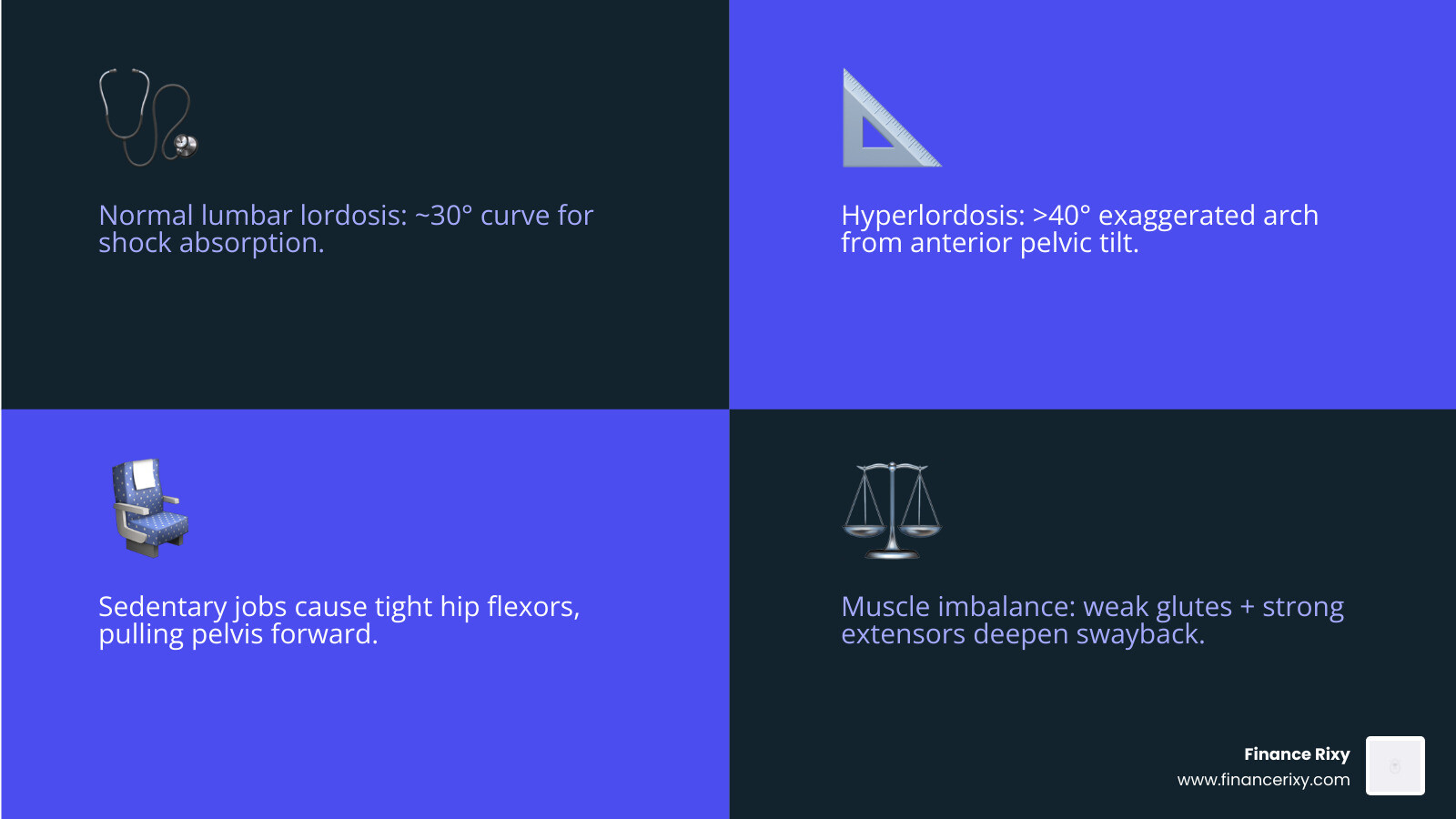
To fix the problem, we first need to understand what is happening inside your body. “Lordosis” itself isn’t a bad word; it actually refers to the natural, healthy inward curve of your lower spine (the lumbar region). This curve is essential because it acts as a shock absorber and helps your spine handle compression forces.
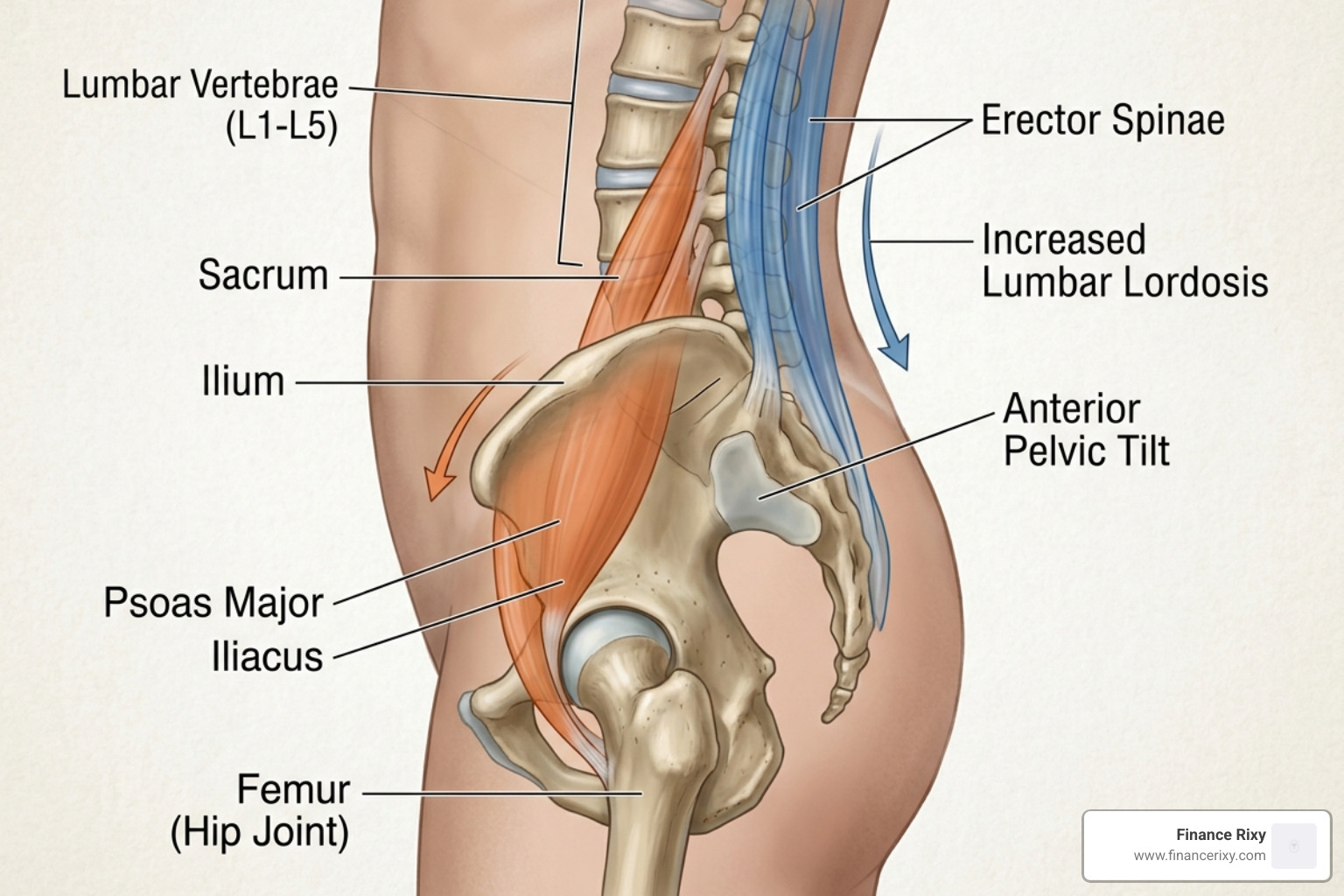
However, when this curve becomes exaggerated, we call it hyperlordosis or “swayback.” In this state, your pelvis tilts forward (known as Anterior Pelvic Tilt or APT), causing your buttocks to stick out and your abdomen to protrude. As we move into April 2026, more of us are feeling the effects of “office chair spine” than ever before.
The Numbers Behind the Curve
How do you know if your curve is “normal” or “excessive”? Medical professionals often measure the Lumbar Lordotic Angle (LLA). While everyone’s body is unique, here is how the general classifications look:
| Spinal Condition | Lumbar Lordotic Angle (LLA) | Visual Indicators |
|---|---|---|
| Normal Curvature | ~30° | Balanced pelvis, neutral spine alignment. |
| Hyperlordosis | >40° | Pronounced arch, “booty pop” posture, belly sticks out. |
The primary culprit for this shift is a muscle imbalance. When we sit for hours, our hip flexors (the muscles at the front of your hips) stay in a shortened, “tight” position. Simultaneously, our glutes and abdominal muscles become weak and “lazy.” This combination creates a tug-of-war that your lower back loses, pulling the pelvis out of alignment.
Scientific research, including a meta-analysis of corrective exercises, shows that these imbalances are highly responsive to targeted movement. The study found that corrective programs lasting between 2 to 12 weeks significantly reduced the LLA, particularly in younger populations who haven’t yet developed permanent structural changes.
How Lordosis Correction Stretches Work to Realign Your Spine
If you imagine your pelvis as a bucket of water, hyperlordosis is like the bucket tipping forward, spilling water over your toes. To fix it, we have to “pull” the bucket back to a level position. This is where lordosis correction stretches work their magic.
Stretching focuses on the “tight” side of the imbalance:
- Hip Flexors: These muscles (like the psoas and iliacus) connect your spine and pelvis to your thigh bone. When they are tight, they literally pull your lower spine forward.
- Lower Back Extensors: These are the muscles running along your spine. In hyperlordosis, they are often in a state of constant contraction, feeling stiff and “cranked up.”
By lengthening these specific tissues, we remove the tension that is forcing the spine into an arch. However, simply stretching isn’t the whole story.
Why lordosis correction stretches work better with strengthening
Think of stretching as “loosening the knots” and strengthening as “installing the support.” If you only stretch, your body will likely snap back into its old, arched position because the supporting muscles aren’t strong enough to hold the new alignment.
To truly fix lordosis, we must target:
- Glute Activation: Your glutes are the powerful muscles that pull the back of the pelvis down, counteracting the hip flexors.
- Core Stability: Specifically the transverse abdominis (your deep “corset” muscle). A strong core acts as an internal brace.
- Hamstrings: These help pull the pelvis into a posterior (rearward) tilt, balancing the forward pull.
According to Healthline’s guide on lordosis exercises, focusing on this dual approach of “stretch the front, strengthen the back/core” is the gold standard for postural correction.
Top Workplace Stretches and Exercises for Posture Correction
Correcting your posture doesn’t require a lifestyle overhaul. It requires “habit stacking”—incorporating small movements into your existing workday. The key is form over intensity. Doing one stretch perfectly is better than doing ten reps with a rounded back or jerky movements.
Essential lordosis correction stretches work for desk workers
These stretches can often be done right in your office or during a quick break:
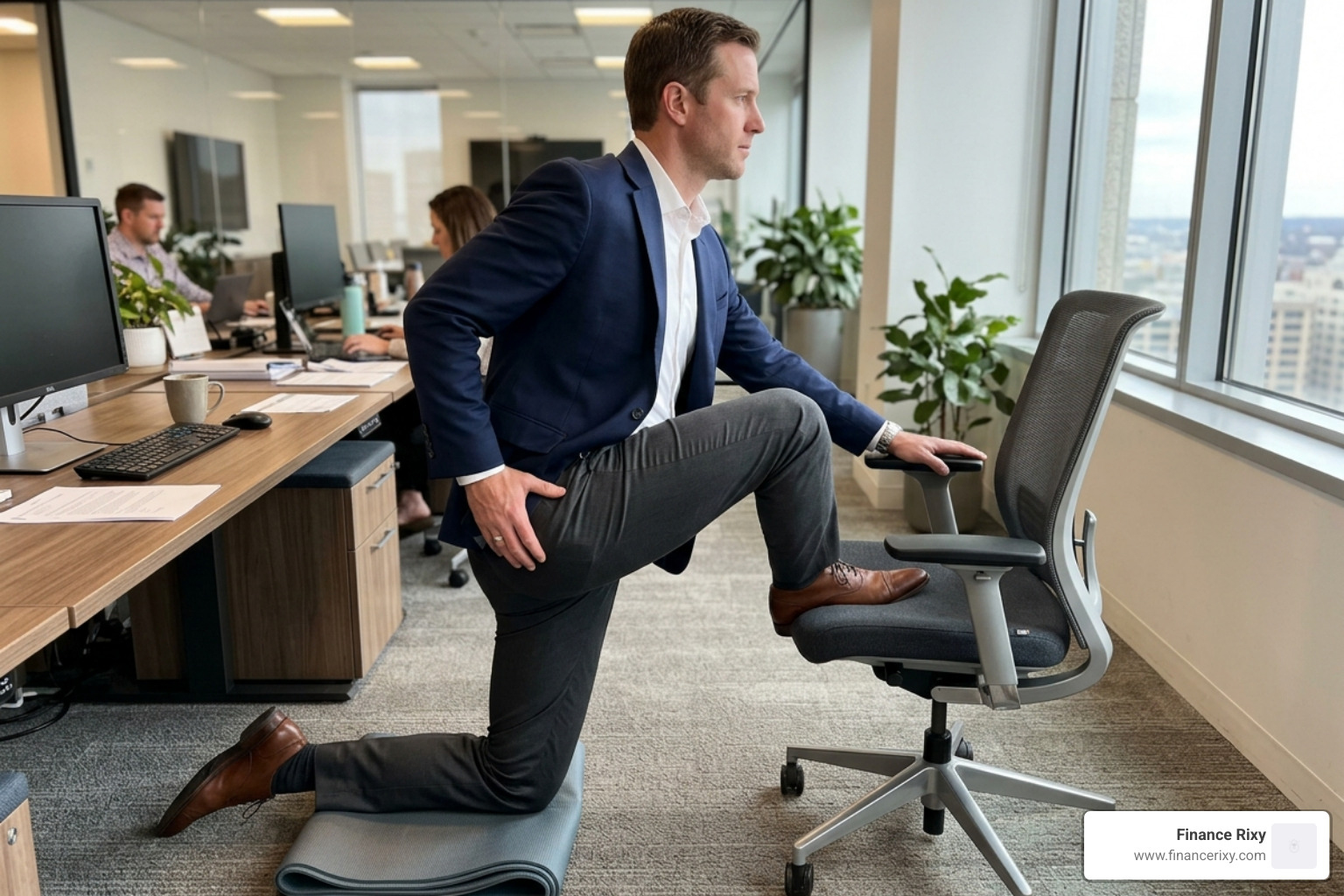
- The Couch Stretch (or Chair Lunge): This is arguably the most effective stretch for hip flexors. Stand in front of a chair or couch. Place one foot on the seat behind you, knee down on a cushion. Squeeze your glute on that side and lean forward slightly. You should feel an intense stretch in the front of your hip.
- Kneeling Hip Flexor Stretch: Similar to the couch stretch but with your back foot on the floor. The “secret sauce” here is to tuck your tailbone under (posterior pelvic tilt) before you lean forward. If you don’t tuck, you’re just arching your back more!
- Hamstring Lengthening: While seated, extend one leg out and hinge forward at the hips (keep your back flat!). This helps release the tension that can sometimes contribute to pelvic instability.
For a visual walkthrough of these movements, you can check out this guide on Lordosis Correction Exercises – 2 Stretches + 6 Exercises.
Strengthening moves to support your stretches
Once you’ve loosened the tight areas, use these moves to “lock in” your progress:
- The Dead Bug: This is a fan favorite for a reason. Lie on your back with arms and legs in the air (knees bent at 90 degrees). Slowly lower the opposite arm and leg toward the floor while keeping your lower back glued to the ground. If your back arches, the rep doesn’t count!
- Pelvic Tilts: This is the foundational movement. While lying down or sitting on a stability ball, practice “tucking” your tailbone to flatten your back against the surface. This builds awareness of where your pelvis is in space.
- Glute Bridges: Lie on your back, feet flat. Lift your hips toward the ceiling, squeezing your glutes hard at the top. Avoid over-arching your back; focus on the hip extension.
Creating a Routine: Frequency and Safety Tips
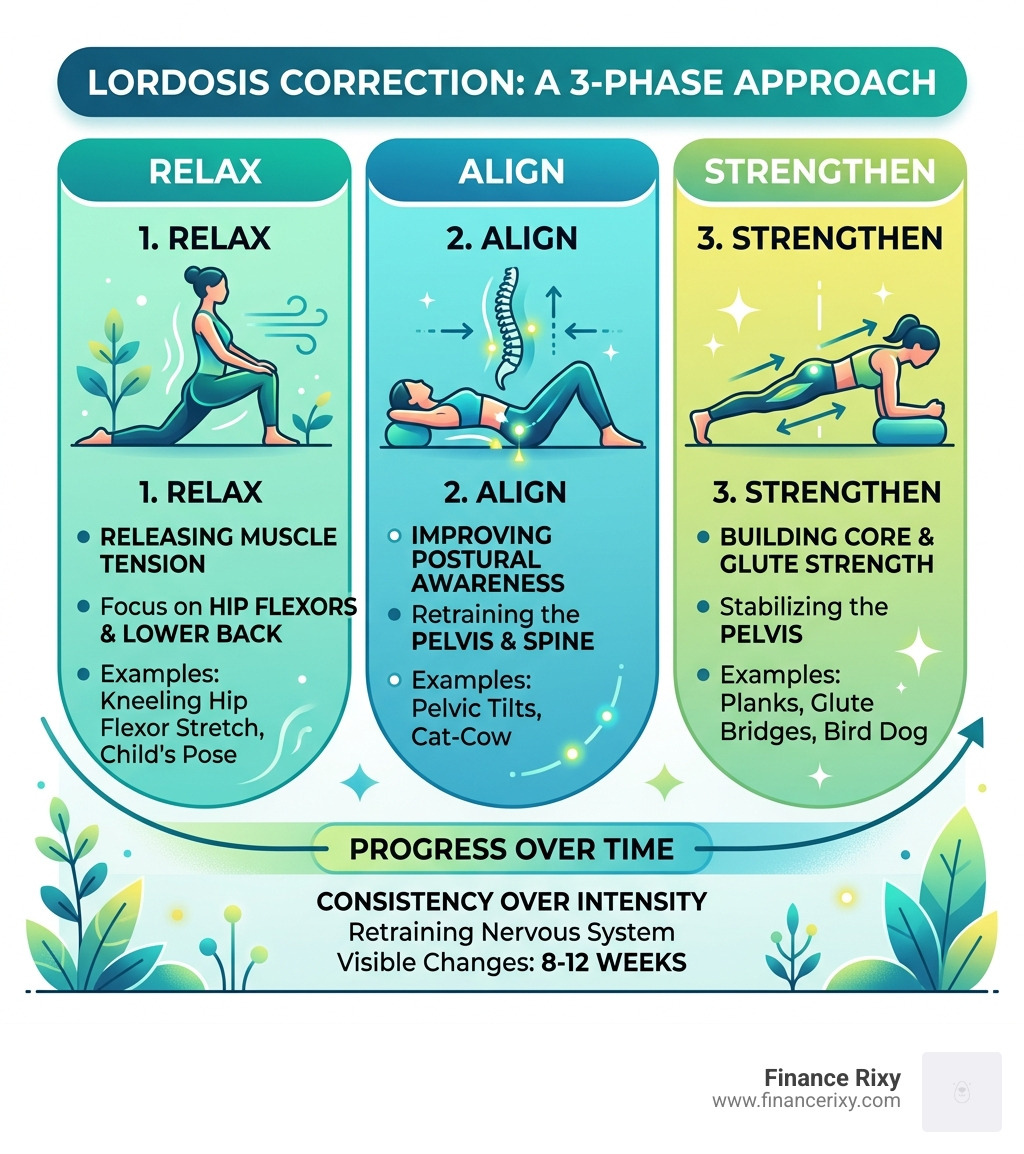
We often get asked: “How often should I do this?” The answer is consistency over intensity. You are trying to retrain your nervous system and remodel your tissues.
- Frequency: Aim for 2–3 sets of stretches daily, especially after long periods of sitting. Strengthening exercises can be done 3–4 times per week.
- The Timeline: Research indicates that while you might feel “looser” in 2 weeks, it takes 8-12 weeks for significant postural changes to show up on an X-ray or in a mirror.
- Progressive Overload: As you get stronger, hold your planks longer or add a resistance band to your glute bridges.
Exercises to Avoid
If you have excessive lordosis, some common gym moves can actually make it worse by increasing back compression:
- Heavy Overhead Presses: If your back arches significantly when you lift weights over your head, you are crushing your facet joints.
- Leg Raises (without core control): If your back pops off the floor during leg raises, you are straining your hip flexors and arching your spine further.
- Romanian Deadlifts with poor form: Avoid any “hinge” movement where you lose your neutral spine.
When to Seek Professional Help: If you experience numbness, tingling, or “electric” pains running down your legs, or if your back pain is keeping you awake at night, it’s time to see a physical therapist or doctor. They can rule out structural issues like spondylolisthesis or disc herniations.
Frequently Asked Questions about Lordosis
How long does it take to see results from stretching?
Most people report a reduction in “tightness” and dull aching within the first 2 weeks. However, muscle adaptation and postural remodeling take time. Expect to commit to a routine for 8 to 12 weeks to see a visible change in your “swayback” profile. Consistency is the only way lordosis correction stretches work long-term.
Can I fix lordosis while working a desk job?
Absolutely. In fact, your desk job is the best place to practice.
- Ergonomics: Use a lumbar support pillow to maintain a neutral curve.
- Standing Desks: Alternate between sitting and standing every 30-60 minutes.
- Habit Stacking: Do 5 pelvic tilts every time you finish an email or join a Zoom call.
Are there exercises I should avoid?
Yes. Avoid anything that forces your back into “hyperextension” under load. This includes “Superman” exercises if you over-arch, or deep backbends in yoga if you don’t have the abdominal strength to support them. Always listen to pain signals—sharp pain is a “stop” sign; a dull muscle stretch is a “go” sign.
Conclusion
At Finance Rixy, we believe that your physical well-being is the foundation of your professional success. You can’t perform at your best if your lower back is screaming for a break. By understanding how lordosis correction stretches work and integrating them into your daily habits, you are taking a proactive step toward a pain-free life.
Your body is incredibly adaptable. Even if you’ve had “bad posture” for years, the science shows that 2 to 12 weeks of dedicated, corrective movement can significantly realign your spine. Start today with a simple hip flexor stretch and a few pelvic tilts. Your back will thank you by April 2026 and beyond.
Ready to take your physical well-being to the next level? Learn more about our wellness programs and discover how small daily habits can lead to massive health returns.
