
The Nerve of You: A Guide to Nerve Flossing and Relief
That Tingling in Your Pinky Might Be Telling You Something
The ulnar nerve glide stretch is a simple, no-equipment exercise that helps relieve numbness, tingling, and pain in the ring and pinky fingers caused by ulnar nerve compression.
Quick answer — how to do a basic ulnar nerve glide stretch:
- Sit or stand tall with your affected arm extended out to the side at shoulder height, palm facing up
- Slowly bend your elbow, bringing your hand toward your shoulder
- Tilt your head away from the affected arm to increase the stretch
- Hold for 2-3 seconds, then return to the starting position
- Repeat 5-10 times, once daily or up to 3 times per day
You’re mid-meeting, typing away, and suddenly your pinky finger goes numb. Or maybe there’s that dull ache on the inside of your elbow that just won’t quit. Sound familiar?
That sensation has a name: ulnar nerve irritation. And for desk workers especially, it’s more common than you’d think. Cubital tunnel syndrome — the condition most often behind these symptoms — is the second most common peripheral nerve entrapment syndrome, right behind carpal tunnel.
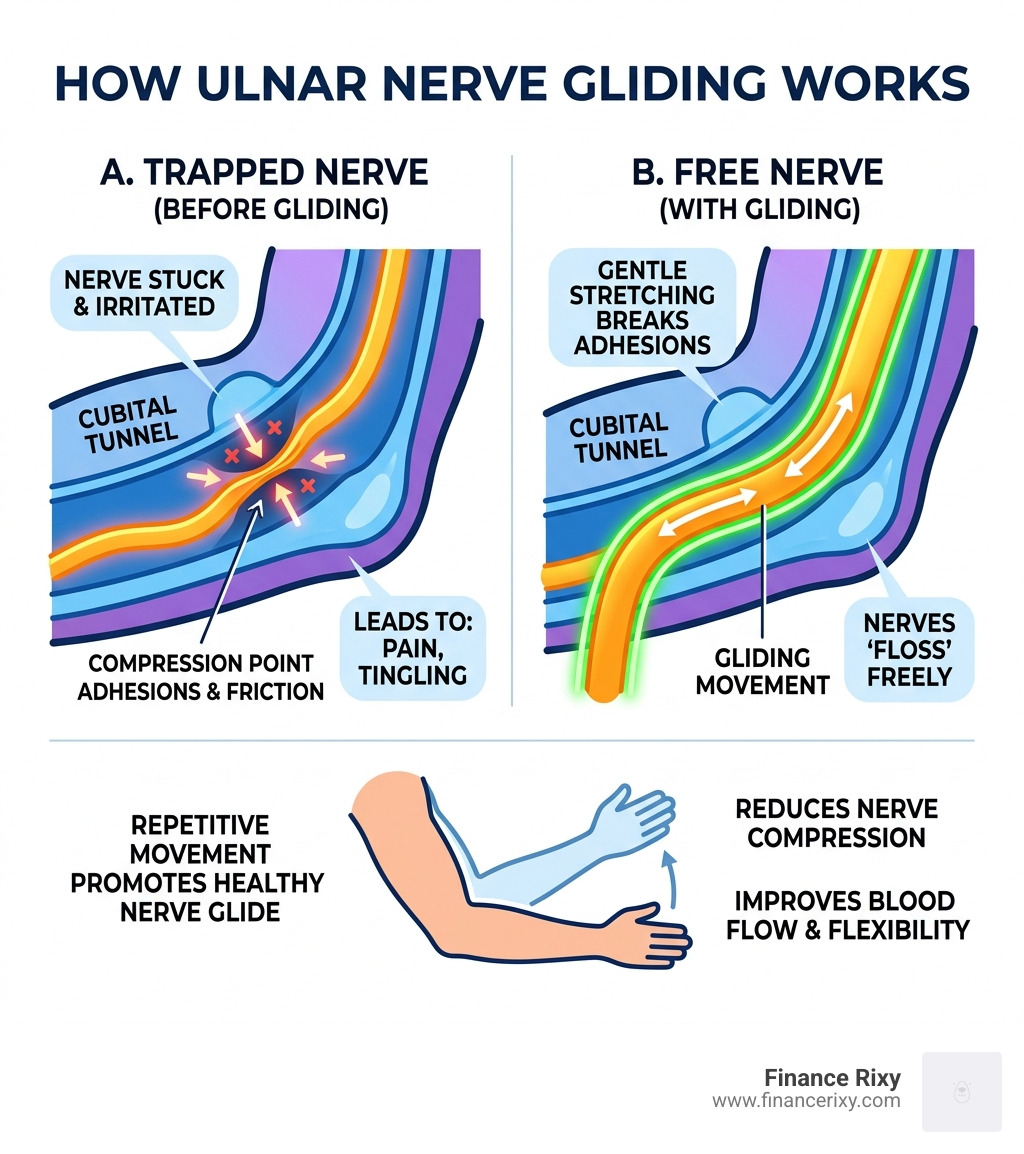
The ulnar nerve runs all the way from your neck, down through your shoulder, around the inside of your elbow (yes, that’s your “funny bone”), and into your hand. When it gets compressed or stuck — from hours of bent-elbow typing, leaning on your desk, or poor posture — you feel it fast.
The good news? A technique called nerve flossing (also known as neural mobilization or nerve gliding) can help. It gently coaxes the nerve back into free movement, reducing friction and breaking down the adhesions that make it feel stuck.
No equipment. No gym. Just a few minutes at your desk.
Understanding Ulnar Nerve Entrapment and Cubital Tunnel Syndrome
To understand why an ulnar nerve glide stretch is so effective, we first need to look at the anatomy of the “funny bone” nerve. The ulnar nerve is one of the three main nerves in your arm. It travels through a narrow 4-millimeter passageway at the elbow called the cubital tunnel. Because this space is so tight, the nerve is incredibly vulnerable to being squeezed or irritated.
When this nerve becomes injured or compressed, we call it cubital tunnel syndrome. This is a peripheral nerve entrapment syndrome, meaning the nerve is literally “trapped” by surrounding tissues. This entrapment leads to paresthesia—that “pins and needles” feeling—specifically in your pinky finger and the half of your ring finger closest to it.
Left untreated, chronic entrapment doesn’t just cause annoying tingles; it can lead to a significant loss of grip strength and muscle wasting in the hand. According to Scientific research on cubital tunnel syndrome, this condition can range from mild annoyance to severe functional impairment.
Common Symptoms and Causes
How do you know if your ulnar nerve is the culprit? Look for these classic signs:
- Numbness and tingling: Especially when your elbow is bent for long periods (like when talking on the phone or sleeping).
- Weakness: Difficulty with fine motor tasks, such as buttoning a shirt or typing.
- A “falling asleep” sensation: Primarily in the small and ring fingers.
- Aching pain: Located on the inside of the elbow.
The causes often boil down to our modern lifestyle. Repetitive strain from office work, postural misalignment (like slouching and putting pressure on your elbows), and even direct elbow trauma—like hitting your “funny bone” too hard—can trigger inflammation. This inflammation creates adhesions, which are essentially internal “scar tissue” that causes the nerve to get stuck instead of sliding smoothly when you move your arm.
The Science of Neural Mobilization: Gliding vs. Tensioning
Nerves are not like muscles; you can’t “stretch” them in the traditional sense. Nerves are more like telephone cables—they need to be able to slide back and forth within a protective nerve sheath. When a nerve is healthy, it glides freely. When it’s irritated, it stays fixed in place, causing pain whenever you move.
Neural mobilization is the umbrella term for exercises designed to restore this movement. We generally categorize these into two types: gliding and tensioning.
| Technique | Action | Goal | Intensity |
|---|---|---|---|
| Nerve Gliding | Pulling the nerve from one end while releasing it at the other. | Reduce friction and break down adhesions. | Low (Beginner) |
| Nerve Tensioning | Pulling the nerve from both ends simultaneously. | Increase the nerve’s tolerance to movement. | High (Advanced) |
Why Nerve Flossing Works
The magic of the ulnar nerve glide stretch lies in its ability to reduce intraneural edema (swelling inside the nerve) and improve blood circulation. By gently moving the nerve back and forth, you are essentially “flossing” it through the cubital tunnel.
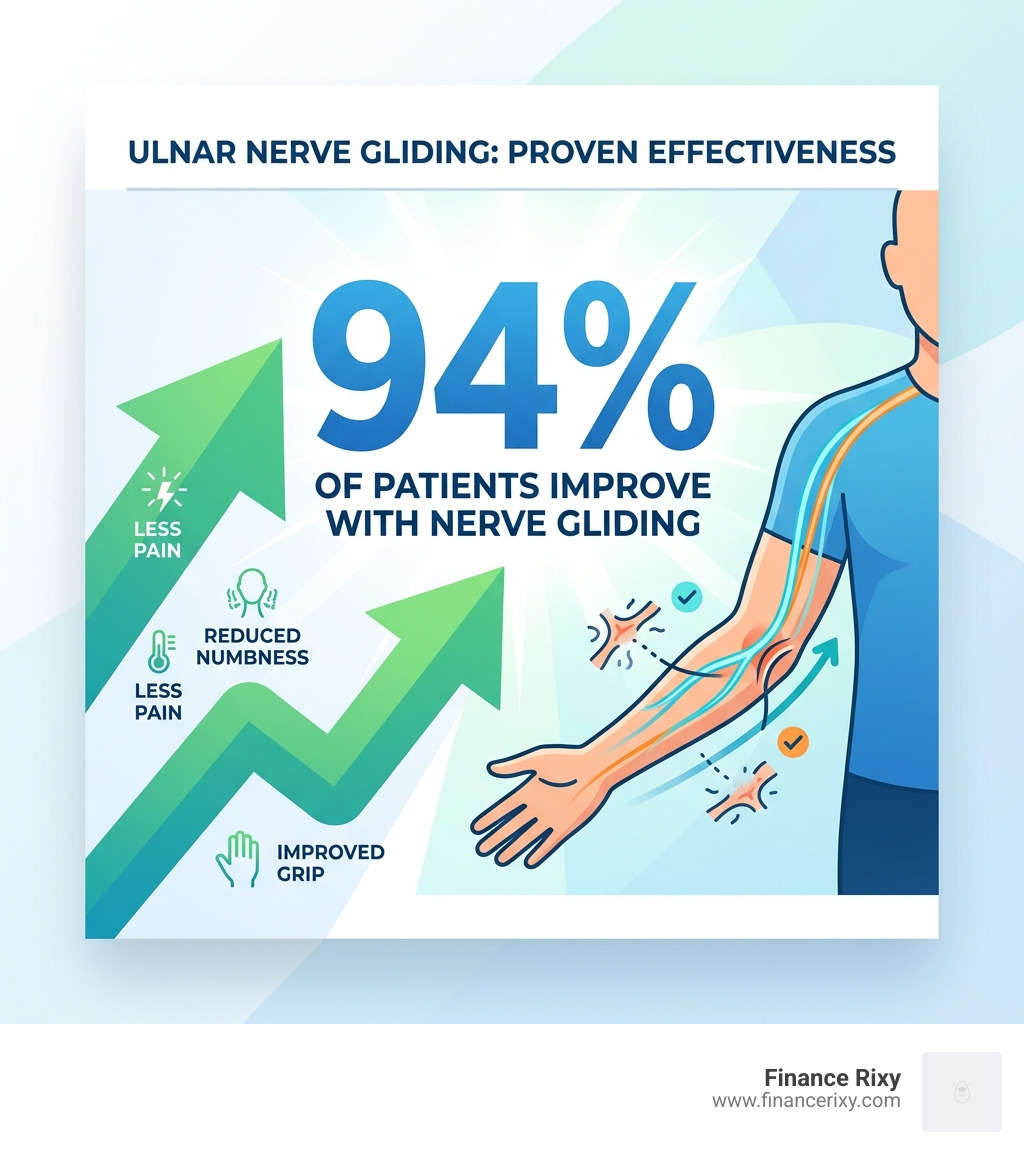
The results are backed by hard data. Scientific research on ulnar nerve gliding outcomes shows that these exercises significantly decrease paresthesia severity. In one study, patients’ Visual Analog Scale (VAS) scores for pain dropped from a 6.7 to a 0.5. Furthermore, ulnar nerve gliding has been shown to improve motor nerve conduction velocity (the speed at which signals travel) and even improve McGowan grade—a clinical scale used to measure the severity of nerve damage. For those with mild to moderate cases, this is often the gold standard for conservative treatment.
Step-by-Step Guide to the Ulnar Nerve Glide Stretch
Before we dive into the movements, remember the golden rule of nerve flossing: Never push through sharp pain. These movements should feel like a gentle “awareness” of the nerve, not a deep, burning muscle stretch. Keep your head in a neutral position unless the specific exercise calls for a tilt, and focus on consistency over intensity.
Beginner Ulnar Nerve Glide Stretch: The Elbow Flexion
This is the perfect starting point if you are currently experiencing a flare-up or have “incipient neuropathy” (the very beginning stages of nerve issues).
- Starting Position: Sit tall and reach your affected arm out to the side, level with your shoulder.
- Palm Up: Turn your palm to face the ceiling.
- The Glide: Slowly bend your elbow, bringing your hand toward your ear.
- The Head Tilt: As you bend your elbow, gently tilt your head away from your hand. This “pulls” the nerve from the neck side while “releasing” it at the hand side.
- Return: Straighten your arm and bring your head back to center.
- Repetitions: Perform 5–10 slow, controlled repetitions.
Advanced Ulnar Nerve Glide Stretch: The A-OK Mask
Once you can perform the beginner glide without any lingering symptoms, you can progress to the “A-OK” mask. This adds a bit more tension and is highly effective for targeting the nerve as it enters the hand.
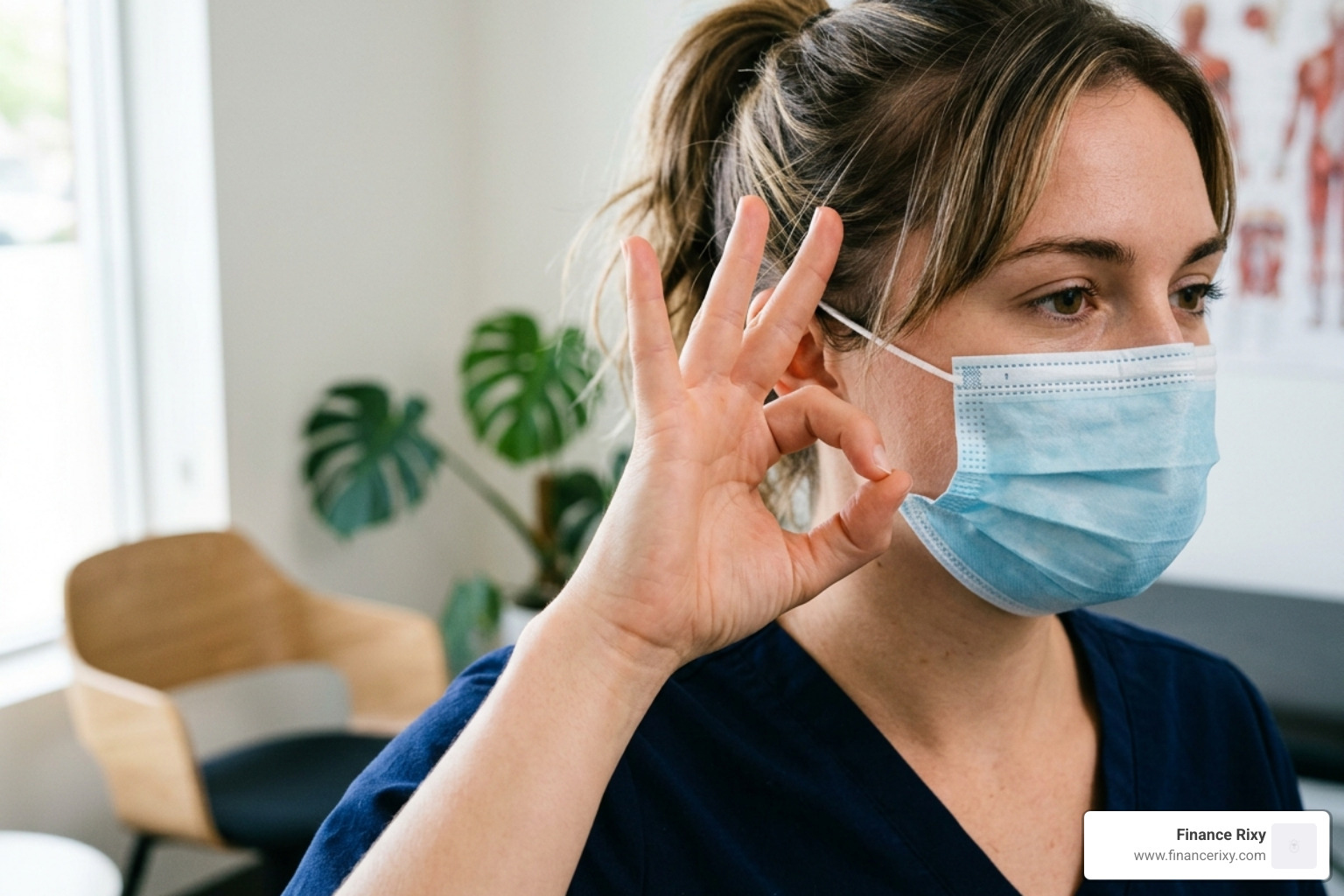
- Make the Sign: Bring your thumb and index finger together to form an “OK” circle. Keep your other three fingers straight.
- Rotate: Turn your hand so your palm faces you.
- The Mask: Bend your elbow and bring your hand toward your face. Wrap your straight fingers around your ear and jaw.
- The Placement: Place the “OK” circle over your eye, like you’re wearing a half-mask.
- Hold: Maintain this position for 3 seconds. You should feel a gentle pull along the inner elbow and pinky side of the wrist.
- Release: Slowly return to the starting position. Repeat 5 times.
The Wall-Assisted Glide
This version uses a wall to help maintain proper shoulder level and provides a more stable base for the stretch.
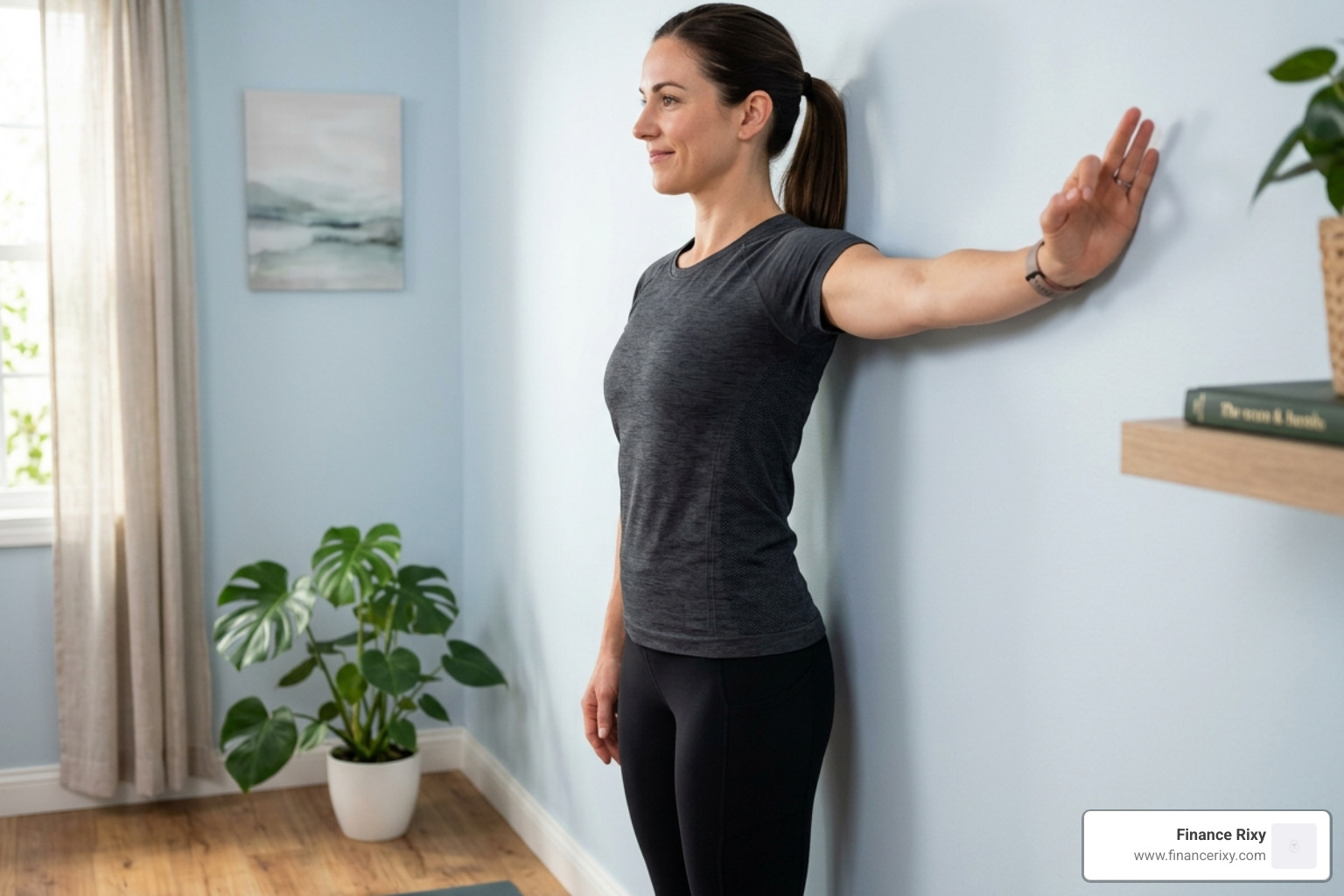
- Positioning: Stand with your affected side toward a wall.
- Elbow Height: Lift your arm and rest the back of your elbow against the wall at shoulder height.
- Hand Placement: Bend your wrist back so your palm faces the wall, with fingers pointing toward the floor.
- The Movement: Gently move your body and hips toward the wall while sliding your elbow slightly further up.
- Engagement: You will feel your forearm muscles—specifically the flexor carpi ulnaris—and your shoulder muscles engaging. This helps increase the range of motion for the nerve pathway.
- Tilt: Tilt your head away from the wall to complete the glide.
Maximizing Results: Frequency, Sensation, and Safety
Consistency is the secret sauce. You won’t fix months of postural misalignment in one session. We recommend starting with 10 repetitions, 3 times daily.
What should you feel? It is perfectly normal to feel a slight tingling sensation or a mild “pull” while you are doing the exercise. However, this sensation should disappear within 5 to 10 minutes after you stop. If the tingling persists or turns into sharp pain, that is your body’s “stop sign.”
Common Mistakes to Avoid
- Pushed Intensity: More is not better. If you pull too hard, you can actually cause more inflammation in the nerve sheath.
- Incorrect Head Tilt: In a glide, the head should move with the release of the hand. Moving the head and hand in opposite directions simultaneously creates a “tensioner,” which might be too aggressive for beginners.
- Irregular Practice: Nerves have a “memory.” Frequent, short sessions are better than one long session once a week.
- Ignoring Flare-ups: If you have a sudden, acute injury, rest first. Don’t start flossing until the initial sharp inflammation has subsided.
Frequently Asked Questions about Ulnar Nerve Glides
How long does it take to see results?
While some people feel immediate relief from the “stuck” sensation, most clinical studies show significant improvement after 4 to 6 weeks of consistent daily practice. In fact, research shows that 50% to 88% of people with cubital tunnel syndrome see improvement without surgery when they stick to a nerve gliding routine.
What should nerve flossing feel like?
It should feel like a gentle, rhythmic tension. Think of it as “waking up” the nerve. It shouldn’t feel like a “burn” (which is usually muscle) or a “zap” (which means you’re over-tensioning the nerve). If you feel nothing at all, ensure your wrist is fully extended, as the ulnar nerve is most sensitive to wrist and finger position.
Who should avoid these exercises?
You should consult a healthcare professional before starting if you have:
- Recent surgery in the arm or neck.
- Acute nerve damage or a sudden loss of all feeling.
- Severe muscle wasting (atrophy) in the hand.
- A McGowan Grade 3 diagnosis (severe entrapment), which often requires surgical intervention rather than just exercise.
Conclusion
At Finance Rixy, we believe that small, daily habits are the foundation of long-term health. The ulnar nerve glide stretch is a prime example of how a few minutes of targeted movement can prevent chronic pain and improve your quality of life.
By incorporating these glides into your daily mobility routine and taking regular posture breaks, you can keep your “funny bone” nerve happy and functional. Your body is designed to move—don’t let your nerves get left behind!
